

Intros That Cut Bounce Rate: What Actually Works
Most readers decide whether to stay in your first paragraph. Learn the four patterns that hold attention and cut bounce rate with proven intro structures.

Contents
Most readers decide whether to stay on your page before they've finished reading your first paragraph. Not your second. Not your subheading. Your first few sentences are doing all the work, and if they don't immediately confirm the reader is in the right place, the reader leaves.
This isn't a design problem or a page speed problem. It's a copy problem. And it's fixable.
This post covers exactly what makes an intro fail, four patterns that hold attention, what to cut, and how to measure whether your rewrite actually worked.
Why Most Readers Leave in the First 10 Seconds
There's a specific behavior search marketers call "pogo-sticking." A reader searches for something, clicks your result, scans the first two or three lines, and hits back before the page even fully loads in their memory. They didn't reject your post because it was slow. They rejected it because the first thing they read didn't answer the question: am I in the right place?
(Productive Blogging) puts it plainly: the first paragraph must answer "what's in it for me?" or readers move on. (Junia.ai) connects this directly to search intent matching, noting that pogo-sticking behavior is tied to how well the intro mirrors what the reader was actually looking for.
Bounce rate is the metric most people track here, but if you're using Google Analytics 4, the signal you want is engagement rate. Universal Analytics stopped processing data on July 1, 2023, and GA4 uses engagement rate as the primary engagement metric, with bounce rate defined as the inverse of engagement rate. The replacement metric counts a session as "engaged" if the user scrolled, clicked, or stayed on the page for at least 10 seconds. A session under 10 seconds with zero scroll depth and no events fired is a pogo-stick. That's the number you're trying to move.
If your engagement rate is low, check scroll depth first. Not the overall site average. The specific post. If 80% of readers leave before they hit your first H2, your intro didn't carry them forward.
The Three Jobs Your First Paragraph Has to Do

Your intro isn't an introduction. It's a confirmation, a credential check, and a contract, all in under 100 words.
Job 1: Confirm the topic. The reader just clicked a headline. Your first sentence needs to echo what they searched for, not warm up to it. (Productive Blogging) is explicit about this: the first paragraph should include the keyword phrase and a brief summary of what the post covers. This isn't keyword stuffing. It's telling someone who just walked through your door that yes, they're in the right room.
Job 2: Signal credibility fast. A stat, a named example, or a specific number in the first two sentences tells the reader this isn't generic padding. (Junia.ai) emphasizes that research and concrete data are the fastest way to establish credibility, and that applies especially to the intro, where the reader's skepticism is highest.
Job 3: Promise a specific payoff. Not "in this post we'll cover..." but a concrete outcome. (Junia.ai) frames the practical intro formula as: name the problem, explain why it matters, promise a useful outcome. The promise has to be specific enough that the reader knows what they'll have after finishing.
If your first paragraph doesn't do all three, it's doing none of them. Readers don't stick around for partial credit.
Four Intro Patterns That Hold Attention (With Examples)
These aren't formulas. They're structures you can copy and adapt. Each one has a different entry point, so pick the one that fits your topic and your reader's likely search query.
Pattern 1: Lead with a number.
Specific stats in sentence one anchor the reader and signal you did research. The structure looks like this:
"Blog posts that get fewer than 10 organic visits per month often share one thing in their first paragraph. Here's what it is."
The number creates immediate specificity. The reader feels like they're reading something real.
Pattern 2: Name the exact problem.
Mirror the reader's search query in plain language before you offer anything. (Junia.ai) identifies problem-naming as the first element of a strong practical intro.
"Your intro has about eight seconds to convince a reader to keep going. Most intros spend those eight seconds on context the reader doesn't need yet."
No buildup. The problem is in the first sentence.
Pattern 3: Contrast the common approach with what actually works.
This sets up tension without a long wind-up.
"Most bounce-rate advice points at page speed or mobile layout. Those matter. But if your intro copy doesn't confirm search intent in the first two sentences, no amount of CDN optimization fixes the exit rate."
The contrast creates a reason to keep reading. The reader thinks: wait, I've been focused on the wrong thing.
Pattern 4: Open with a concrete observation.
Not a definition, not a history lesson. A specific thing that happened or a thing that's true right now. (Productive Blogging) explicitly warns against generic openers, noting that the hook must answer "what's in it for me?" immediately.
"The post that drives a lot of my traffic has a short first sentence. The post I spent the most time on has a lower engagement rate. The difference is the first paragraph."
Real, specific, observable. The reader wants to know what you know.
What Kills an Intro (Patterns to Cut)
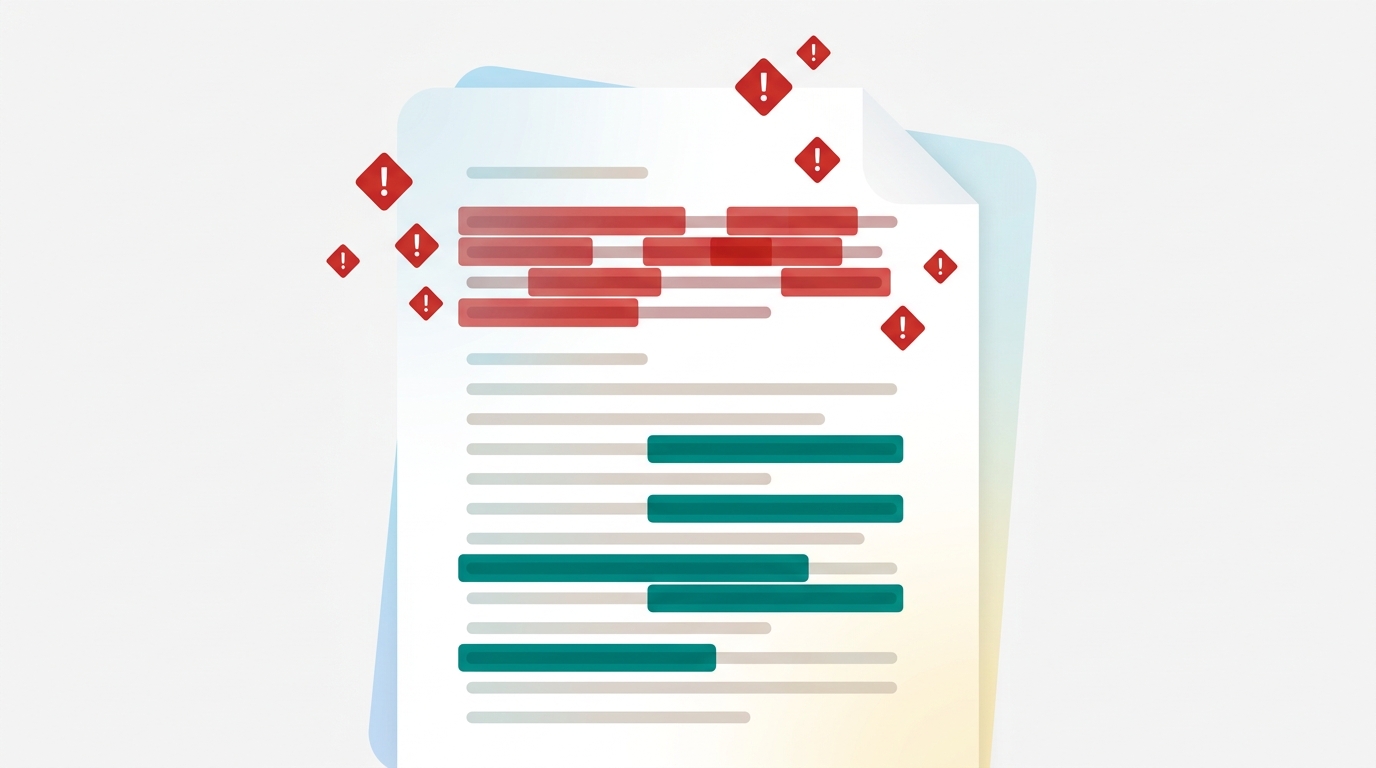
If you're rewriting an existing intro, these are the things to cut first.
The slow wind-up. "In today's digital landscape..." or "Since the dawn of content marketing..." or a dictionary definition of a term your reader already knows. Both (Productive Blogging) and (Junia.ai) flag this by emphasizing immediate problem-naming and intent-matching. Every word before the actual point is a word the reader has to survive before deciding whether to stay.
The keyword-stuffed first sentence. Cramming your target phrase in twice in the first sentence signals low quality to the reader before it signals anything to a crawler. (Productive Blogging) notes that keyword placement matters but has to serve readability, not override it.
The vague promise. "In this post, we'll cover everything you need to know about X." This tells the reader nothing. It's a table of contents preview, not a payoff promise. (Junia.ai) is clear that the outcome you promise has to be useful and specific, not just a restatement of the topic.
The credibility-free opener. No stat, no named example, no specific detail in the first 50 words. You're asking the reader to trust that the rest of the post is worth reading with zero evidence. Most won't.
Cut these and you've already improved the intro before you've written a single new sentence.
How to Test Whether Your Intro Is Actually Working

Start with GA4 engagement rate, filtered to your blog posts, sorted ascending. The posts at the bottom of the list are your worst performers. Pick the one with the most traffic (so you have a meaningful sample size) and check its scroll depth in the behavior reports.
If 80% of readers leave before your first H2, the intro failed to carry them forward. The post body might be great. It doesn't matter if nobody gets there.
For A/B testing, a simple framework for solo founders: publish two versions of the intro on different traffic days. Compare engagement rate in GA4 over two-week windows. You don't need fancy tooling. You need enough sessions to see a real difference, which usually means enough sessions to see a real difference.
For heat maps, verify pricing directly from current official pricing pages before stating free-tier availability. Set up a Clarity heatmap on your highest-traffic post this week. Check scroll depth after seven days. You'll see exactly where readers stop. That's your intro's failure point made visible.
The concrete action: open GA4 today, find the post with the worst engagement rate, read the first paragraph out loud, and ask yourself whether it does the three jobs above.
Writing the Intro Last (and Why It Works)
Here's the counter-intuitive move: write the intro after you finish the body.
(Junia.ai) recommends outlining before writing, which naturally defers the intro until the structure is clear. The logic extends further. Your intro is a promise. You can only write an accurate, specific promise after you know exactly what you're delivering.
Write the full post first. Then write three intro variants in 10 minutes. Pick the one that most directly mirrors the reader's search intent and the actual content of the post.
This matters even more if you're using an AI writing tool. The intro is the first thing a reader sees. It's where generic phrasing does the most damage, because readers make their stay-or-leave decision on that first paragraph before they've seen anything else the tool produced. If your brand voice is going to hold anywhere, it has to hold there.
FAQ
Does GA4 still track bounce rate?
GA4 replaced bounce rate with engagement rate starting in 2023. Engaged sessions are ones where the user scrolled, clicked, or stayed at least 10 seconds. If you're still looking at a bounce rate number, you're either using an older property or a third-party integration. Switch to engagement rate as your primary intro-quality signal.
How long should a blog post intro actually be?
Shorter than you think. Two to four short paragraphs is usually right for informational content. The intro's job is to confirm the topic, signal credibility, and promise a payoff, then get out of the way. Longer intros that delay the substance are where pogo-sticking happens.
What if my post covers a broad topic with multiple audiences?
Pick one audience and write directly to them. An intro that tries to speak to everyone confirms the topic for nobody. If you have genuinely different audience segments, consider separate posts with separate intros, each one mirroring that segment's specific search query.
Can I use the "lead with a number" pattern if I don't have a proprietary stat?
Yes. Cite a public stat with a source inline. A real cited number is better than a vague claim without one. What you can't do is round it off or restate it loosely. If the source says 57%, write 57%, not "more than half."
How do I know if my rewrite actually worked, not just placebo effect?
Wait at least two weeks after republishing before checking GA4. You need enough sessions to see a real engagement rate shift. Then compare the two-week window before and after the rewrite, same traffic source. If the engagement rate moved up and scroll depth improved, the rewrite worked. If not, try a different intro pattern and retest.
Sources
Open GA4 right now. Filter your blog posts by engagement rate, ascending. Read the first paragraph of the worst performer out loud. If it doesn't confirm the topic, signal credibility, and promise a specific payoff inside 100 words, rewrite it using one of the four patterns above. Republish, set a Clarity heatmap, and check scroll depth in seven days. If you want the research, drafting, and fact-checking done in one pipeline so the intro gets the same sourcing treatment as the rest of the post, that's exactly what Ryterr does.
Ryterr Team
Written with Ryterr: researched on the live web, written in our voice and fact-checked before publishing.