

SEO and AI Marketing for Publishers: 5 Automated Workflows That Scale
59.7% of Google searches in the US ended without a click to another web property in 2024, according to a SparkToro zero-click search study. For every 1,000 searches, only 360 clicks go to the open web. That number keeps shrinking.
Publishers who still measure success as "position 1 in blue links" are optimizing for a surface that's eroding. The job has changed. It's not about ranking anymore. It's about being the source that AI systems cite.
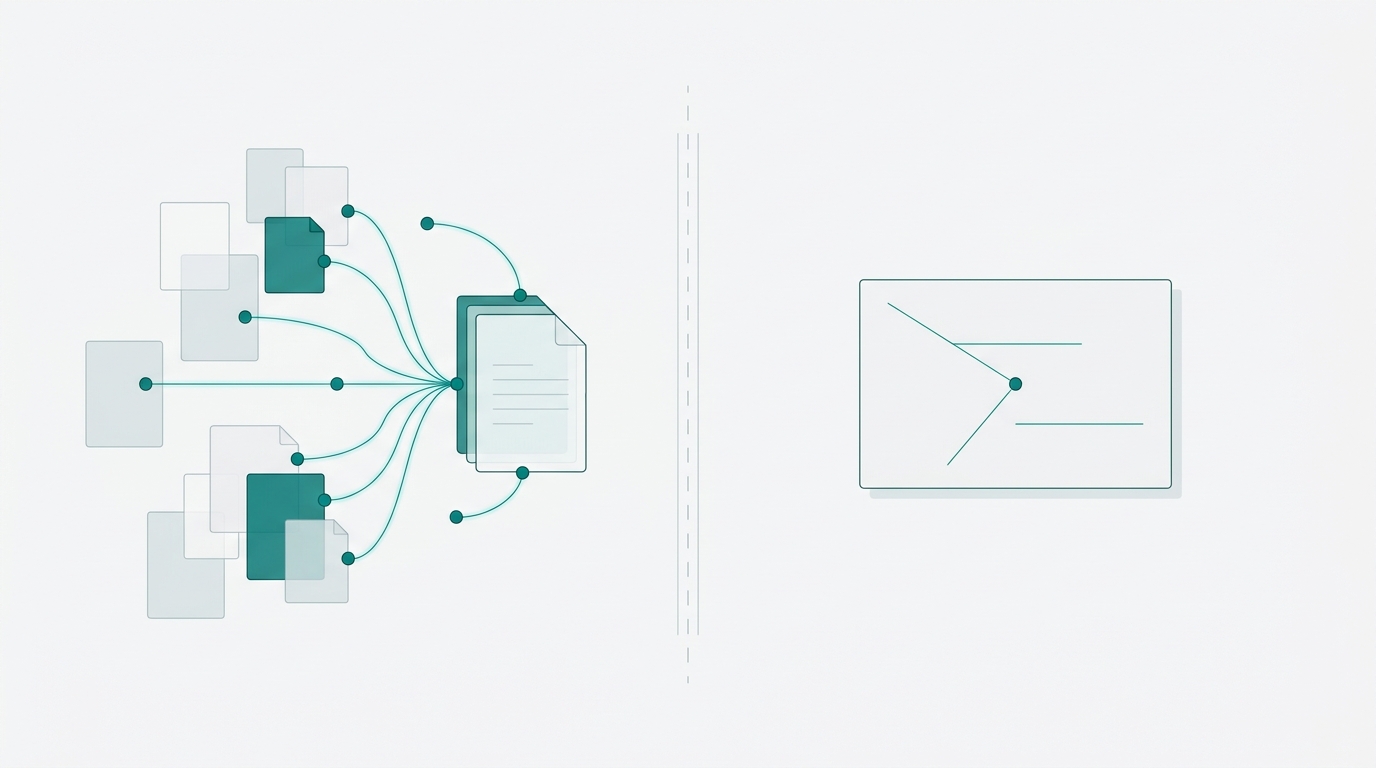
This is a workflow piece, not an AI SEO explainer. The five workflows below are for publishers who want a visible pipeline, not a black box that spits out draft copy and calls it done.
Why Publishers Need a Different AI SEO Stack
Generic SaaS blogs can afford to get SEO wrong. Publishers can't.
Ad revenue, byline trust, editorial standards, and archive depth all create constraints that most AI writing tools ignore completely. And the financial stakes are real: a 2024 study estimated that Google's AI search shift could cost news publishers $2 billion in lost ad revenue, according to Reuters. AI Overviews reduce organic click-through rates by 18% to 64% depending on query type, according to Search Engine Land.
That's the threat. Here's the opportunity.
AI Overviews appear on 15% of all Google searches as of late 2024, with healthcare queries at 47% and B2B tech at 32%, according to Search Engine Journal (figures from paywalled source, not independently verifiable). The publishers who get cited in those answers gain brand exposure without having to rank in the traditional sense. Cyrus Shepard, founder of Zyppy SEO, put it directly: "Publishers need to think about being cited in AI answers, not just ranking in blue links. The optimization target has shifted from position 1 to being the source that AI systems trust and reference."
That shift changes what the AI tool's job is. It belongs in the middle of your workflow, not at the end of it. Research, drafting support, citation verification, and publishing automation are where AI earns its place. It doesn't replace editorial judgment. It removes the grunt work that slows editorial judgment down.
The publishers moving fastest understand this. Forbes built Adelaide, an AI-powered content management system that assists with drafting, optimization, and distribution, according to Forbes TechCouncil. Axel Springer, which owns Politico and Business Insider, partnered with OpenAI to integrate its journalism into ChatGPT, according to Reuters. These aren't experiments. They're infrastructure decisions.
But 53% of publishers are not using AI tools for content creation, while 36% had used AI for some tasks, according to Reuters. The hesitation is mostly justified: the tools weren't built for publishers. The five workflows below are.
Workflow 1: Live SERP and Source Research Before Drafting
The first step is not writing. It's knowing what already exists.
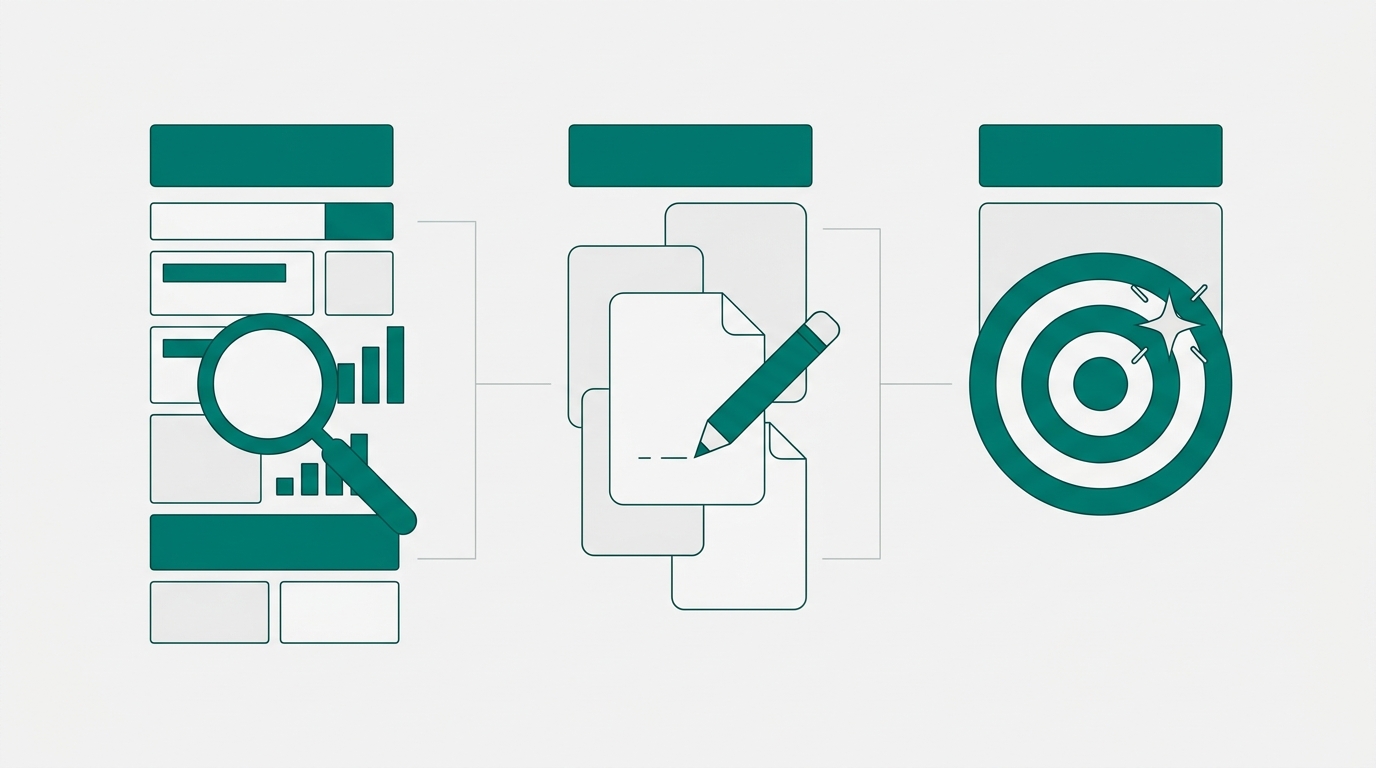
Before a draft starts, the research layer should pull live SERPs, competitor pages, and primary source material. This is where AI tools do their best work: understanding what ranks, what the top pages cover, and what gaps exist that your publication can fill. Most content teams skip this and go straight to the draft. That's how you end up writing the same article as everyone else.
The research stage should also audit what you already have. High-performing archive pages can be refreshed and restructured for AI search instead of building from scratch. One well-sourced page that already has organic authority is worth more than ten new articles with no backlinks and no history.
Publishers should build topic clusters around one entity or problem, then use original reporting and expert signals to earn citations in AI answers. That means:
- Identifying the primary entity your article should be associated with
- Finding the questions that answer engines are already surfacing for that entity
- Pulling in primary sources, data, and expert quotes before the draft exists
- Flagging existing archive content that can feed the cluster
The tool matters here. A system that shows you exactly which sources it pulled, which SERPs it read, and what it decided to include is a system your editors can trust. A system that returns a clean draft with no trace of its sources is a liability. You can't fact-check what you can't see.
Workflow 2: Drafting That Starts With Structure, Not Prose
Danny Goodwin, Executive Editor at Search Engine Land, described AI Overviews as "the biggest change to Google Search in 20 years". The structural implication of that is real: AI systems parse content differently than human readers do. They look for clear headings, atomic paragraphs, and question-based H2s that map cleanly to queries.
That means the draft shouldn't start with a lede. It should start with a skeleton.
Lock the structure first: headings, subheadings, and the question each section answers. Then fill in the prose. When AI handles the first draft, this approach keeps the output tighter and reduces the rewrite loop. The sections stay focused because they were scoped before the writing started.
A few rules for structuring drafts for AI search:
- Open each section by answering the question the heading poses, then expand
- Use atomic paragraphs of 2-4 sentences, not long multi-point blocks
- Write H2s and H3s as questions your reader would actually type
- Put the direct answer in the first sentence of each section, not the third
Brand voice also belongs in the structure stage, not the polish stage. If your publication has a defined tone, that constraint should live in the brief, not get patched in during editing. The draft should arrive in your voice, not in generic AI-speak that an editor has to sand down into something publishable.

Workflow 3: Fact-Checking With Visible Citations
This is the step that separates a publisher-grade workflow from a generic content tool.
Every factual claim should be checked against a live source before the article publishes. Not post-publication. Not as a background model behavior you hope is working. Fact-checking should be a discrete stage in the pipeline with visible output: here's the claim, here's the source, here's whether it passed.
That visibility matters for three reasons.
First, editorial accountability. If an article carries a byline, the editor needs to see where each claim came from. "The AI checked it" is not a defensible position when a claim turns out to be wrong.
Second, legal exposure. Publishers including The New York Times filed lawsuits against OpenAI and Microsoft over unauthorized use of copyrighted content, according to Reuters. The governance landscape is still being defined. A workflow that surfaces source URLs makes it much easier to verify that cited material is used correctly.
Third, AI search visibility. Content that cites real sources, shows expertise, and demonstrates accuracy is more likely to be trusted by answer engines. EEAT signals, expert quotes, and real citations are how you earn the kind of authority that gets you quoted in an AI Overview rather than bypassed by one.
The workflow should fail closed. If a claim can't be verified against a live source, it doesn't ship. Invented stats, fabricated quotes, and hallucinated URLs are not edge cases. They're the default failure mode of AI writing tools that skip this step. The fact-check stage is what catches them before your readers do.
Workflow 4: Original Illustrations and CMS Publishing
The draft isn't done when the text is done. A publisher-ready article needs a featured image, inline visuals, SEO metadata, and a direct path to the CMS.
AI image generation has gotten good enough to produce on-brand illustrations quickly. The relevant constraint is consistency: the images should match your palette, your visual language, and the article's subject. An image that looks like it came from a stock photo library and an image generated to match your brand's exact color values are not the same thing. Brand colors should be an input to the image generation step, not an afterthought.
After the text is final, citations are checked, and images are attached, the last step before human approval is packaging for the CMS. That means:
- SEO title and meta description
- Slug and canonical URL
- Featured image with alt text
- Structured frontmatter that maps to your CMS fields
Human approval should happen at this stage, not earlier. Reviewing a fully packaged article, with all elements in place, is faster than reviewing a raw draft and then assembling the rest manually. The governance gate is more useful when there's nothing left to do after it except click publish.
For teams publishing 1 to 4 posts per week, this matters more than it looks. Every time a writer has to copy content between tools, generate an image separately, or manually fill in metadata, that's time spent on tasks that don't require editorial judgment. Compress those steps and you get more consistent output with the same headcount.
Perplexity launched a Publishers' Program in September 2024, offering revenue sharing and API access to publishers whose content is cited in AI answers, according to Perplexity's announcement. That model only works if your content is structured well enough to be cited. A clean, fully packaged article is more likely to earn a reference in an AI answer than a page that loads slowly, has missing metadata, or buries its main point in paragraph six.

Workflow 5: Refresh, Repurpose, and Measure for AI Search
The most underused workflow in publisher content ops is also the most efficient: going back to what already works and making it work harder.
An article that already ranks organically has domain authority, backlinks, and indexed history. It's a better candidate for AI Overview citations than a new article with none of those signals. Refreshing it with updated data, better structure, and answer-first formatting is faster than writing from scratch, and the return is higher.
The refresh workflow should include:
- An audit of the top 20% of archive content by traffic or link equity
- A structural review: does each page use question-based headings and atomic paragraphs?
- A citation check: are the sources still live, and do they support the claims?
- A metadata update: is the SEO title and description still competitive for the current SERP?
Measuring for AI search means tracking more than organic rankings. You want to know whether your pages are being cited in AI Overviews and answer engines. That's a different signal than a SERP position, and it requires different tooling to surface.
Repurposing is also underused. One well-researched article can become a newsletter section, a social thread, or an updated landing page if the source set is already clean. The research doesn't need to be repeated. The structure just needs to be adapted to the format.
The goal is a publishing loop, not a one-off output. A single good article doesn't compound. A system that ships with the same standards every week does. That means research, drafting, fact-checking, and publishing should follow the same steps every time, with the same human approval gate, regardless of topic or author.

FAQ
Do these workflows work for smaller editorial teams, or only large publishers?
They're designed for teams shipping 1 to 4 posts per week, not for newsrooms with 50 editors. The value is in removing the repetitive steps (research aggregation, metadata entry, image generation) so a small team can maintain consistent quality without adding headcount. The governance gate is just as important at small scale; you still need one human approval before anything publishes.
Won't AI Overviews hurt traffic even if my content gets cited?
Yes, potentially. AI Overviews reduce organic click-through rates by 18% to 64% depending on query type, according to Search Engine Land. Being cited in an Overview doesn't always translate to a click. But being ignored entirely is worse. The strategy is to earn the citation, keep your brand visible in answer surfaces, and build direct channels (newsletters, subscriptions) that don't depend on search click volume.
How do I stop the fact-check step from becoming a bottleneck?
The fact-check step should be part of the automated pipeline, not a manual task assigned to an editor. The system checks each claim against its source before the article reaches human review. By the time a human sees the draft, the citation list should already be attached. The editor's job is to verify the judgment calls, not to re-research the statistics.
What if my archive content has outdated or broken source links?
That's exactly what the refresh workflow is for. The citation check stage will flag claims with broken or missing sources. You can either find a current source that supports the same claim, update the claim to reflect current data, or remove the claim. A page with three well-sourced claims ranks better than a page with ten claims, three of which are broken or fabricated.
Will repurposed content compete with the original article for the same keywords?
It can, if you're not careful. The repurposed version should target a different format or audience segment: a newsletter version doesn't compete with the indexed article, and a social thread doesn't cannibalize it either. If you're creating a second indexed page on the same topic, you need to differentiate the angle, the audience, or the query intent. Canonical tags help, but they're not a substitute for genuine differentiation.
Sources
- SparkToro: 2024 Zero-Click Search Study
- Search Engine Journal: Google AI Overviews Study
- Reuters: Google AI Search Shift Could Cost Publishers $2 Billion
- Reuters: News Publishers Wary of AI Use, Survey Shows
- Search Engine Land: AI Overviews Organic Click-Through Rate Impact
- Forbes TechCouncil: How Forbes Is Using AI to Transform Digital Publishing
- Reuters: Axel Springer and OpenAI Partnership
- Google Blog: AI Overviews in 100+ Countries
- Perplexity: Publishers' Program
- Reuters: NY Times Sues OpenAI and Microsoft
- Search Engine Land: Google AI Overviews SEO Impact
- Moz: AI Search Optimization
Pick one article from your archive. Run it through all five steps: live research check, structural review, citation audit, image update, and CMS repackaging. That single article tells you more about where your workflow is broken than any planning doc can. If you want a tool that handles all five steps in one visible pipeline and publishes directly to your site, Ryterr is built for exactly that.