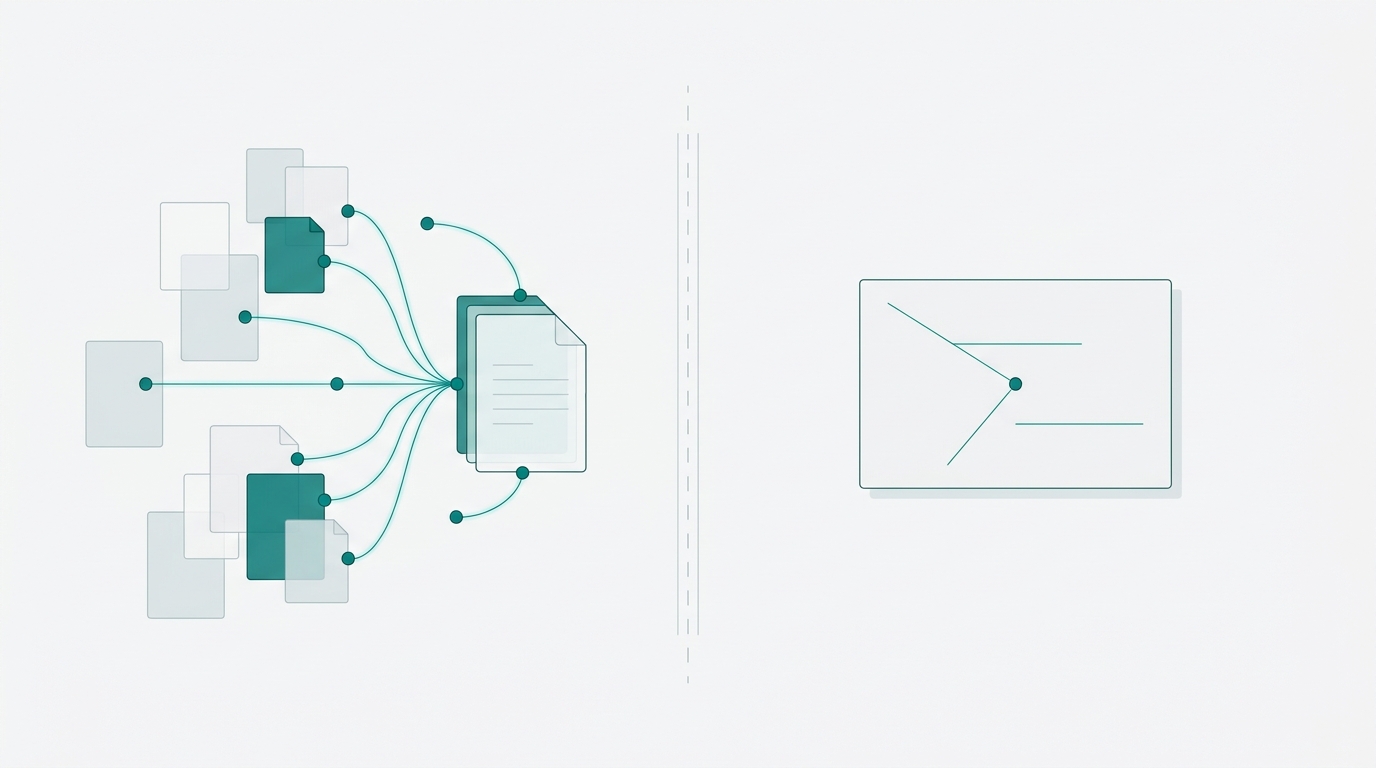


Blog to Newsletter to Social: One Post, Three Channels
Around 94% of marketers say they repurpose content (Bit Social). Most of them are doing it wrong.
The wrong version looks like this: publish a blog post, paste the opening paragraph into an email, share the link on LinkedIn with a one-line caption, and call it a pipeline. The post underperforms everywhere except maybe search. The newsletter feels like a press release. The social post gets ignored. You conclude that repurposing "doesn't really work for us."
It's not the idea that's broken. It's the execution.
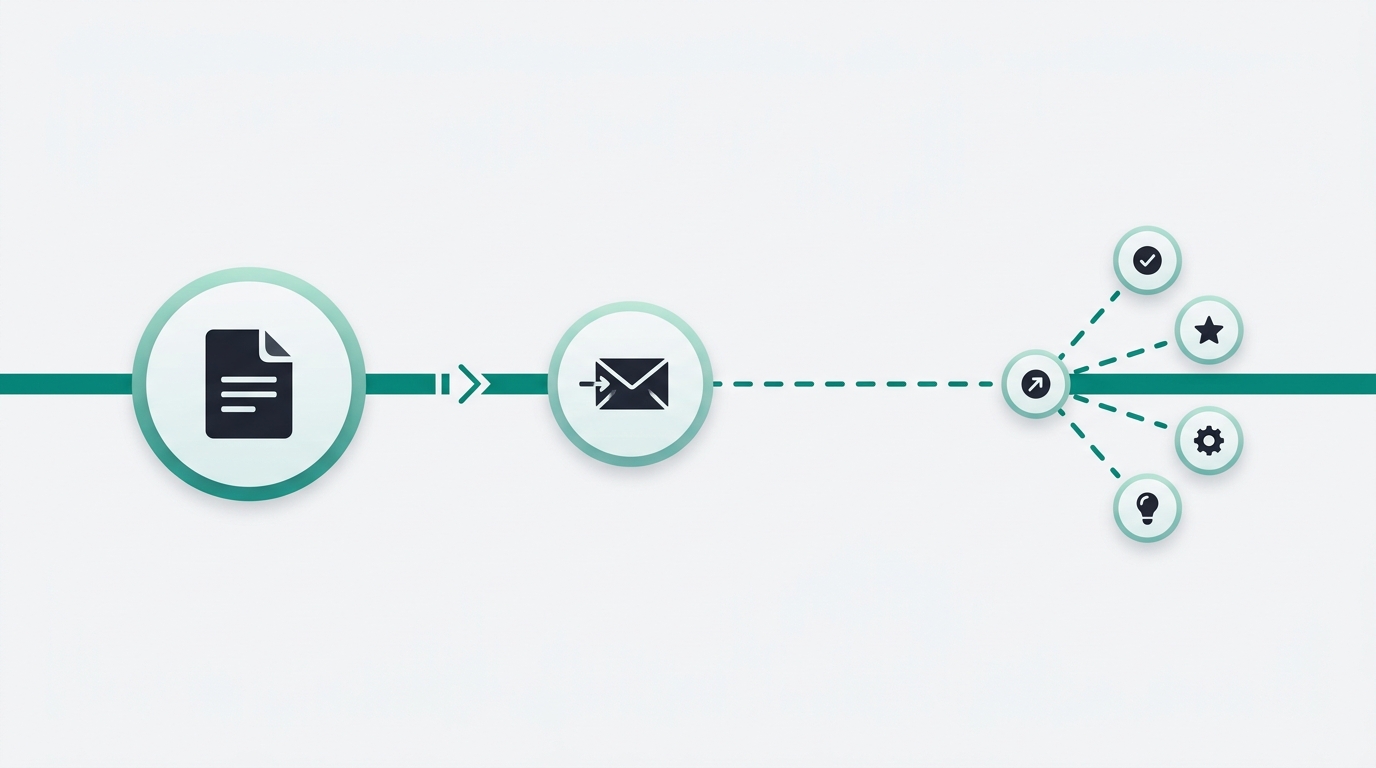
This post lays out a specific three-stage process for transforming one blog post into a newsletter and a social sequence without losing the facts, the voice, or the intent along the way. Not a "repurpose more" pep talk. A concrete transformation framework with defined rules for each stage.
The core principle is editorial control: same research, same voice, different hook and different depth for each channel. The blog is the source of record. Everything else traces back to it.
Why Most Repurposing Fails Before It Starts
Start with the HubSpot data because it's clarifying. Among social media marketers, 17% share the exact same content across platforms without any changes (HubSpot). Another 48% make minor adaptations. Only 34% create unique content from scratch for each platform.
The 17% who copy-paste verbatim are the obvious case. But the 48% making "minor adaptations" are where most pipelines quietly break. Minor adaptations means a different headline, maybe a trimmed opening. The research stays the same. The structure stays the same. The CTA stays the same. The algorithm and the reader can both tell.
There are three specific failure modes worth naming:
- Citation drift: Stats get dropped when the text gets shortened. A newsletter that references "a recent study" without linking to it is not a repurposed post. It's a paraphrase with a credibility problem.
- Voice drift: The tone flattens when someone other than the original author does the transformation. The blog sounds like a founder. The newsletter sounds like a marketing email. The social post sounds like a copywriter's caption. Three different people, three different registers.
- Intent drift: A blog post written for search intent has a very different job than a newsletter. If you don't consciously reframe the entry point, the newsletter reads like an SEO article and nobody clicks.
The fix is not a tool. It's a sequence of deliberate decisions. And it starts before you touch the newsletter.
The Source Asset: What Makes a Blog Worth Repurposing
Not every post earns the pipeline treatment. If the source post is thin, every downstream asset will be thinner.
The standard to hit before you start: the post has at least one original claim, at least one cited stat with a live URL, and a thesis you can write in one sentence. If you can't state the thesis in one sentence, the pipeline will drift. You need one clear argument to preserve across three formats.
DigitalApplied calls this the 1:10 Rule: "Aim to generate at least 10 distinct content assets from every flagship blog post," and they explicitly flag that it's "achievable within a standard content team's bandwidth" (DigitalApplied). But the 10 assets only exist if the flagship post has enough substance to atomize. A 400-word thought piece cannot fuel a newsletter reframe, five social posts, and anything else without becoming noise.
Practical checklist for pipeline-ready status:
- Thesis sentence written and visible (ideally in the opening paragraph)
- Every stat cited with a URL that actually loads
- H2 structure reflects the argument, not just a list of loosely related topics
- At least one section that contains an insight, not just information
Write for SEO intent first. Keyword, search intent, and cited claims locked before you touch anything else. The newsletter and social versions are downstream products. The blog is the factory.
Stage 1: Blog to Newsletter
The newsletter is not a summary. A summary flattens. The newsletter is a reframe: same research, different entry point.
Your newsletter reader already trusts you. They opted in. They don't need you to establish credibility with a search-optimized headline and a 150-word context-setting intro. That's what the blog does for strangers. The newsletter opens with the tension, the observation, or the number that made you write the post in the first place.
Concrete rules for the reframe:
Hook rewrite. The blog opens with a search-intent headline. The newsletter opens with a specific observation or number that creates curiosity inside an inbox. "17% of marketers copy-paste the same post to every platform and wonder why it doesn't work" is a newsletter hook. "Repurposing Pipeline: Blog to Newsletter to Social" is a blog title.
Depth adjustment. Cut the sections that exist for SEO completeness. You included that H2 because it's a related keyword your reader might search for. Your newsletter subscriber is not searching. Keep the one section with the sharpest insight. Link back to the full post for everything else.
CTA shift. Blog CTAs drive to a next post or a product trial. Newsletter CTAs drive to one action: a reply, a click, or a decision. One action. Not three.
Fact preservation. This is the rule that separates a good newsletter from a liability. Every stat that survives the cut must carry its source. If you drop the citation to save space, drop the stat too. A statistic without a source in a newsletter is just an assertion. It erodes trust over time, especially with a technical audience.
On the effectiveness question: 46% of marketers say repurposing is more effective than creating new content from scratch, and 65% say it's an effective tactic overall (ClearVoice). But "effective" in both cases depends on the quality of the reframe. The 65% includes a lot of minor-adaptation pipelines that are effective relative to nothing, not relative to what's possible.
Stage 2: Newsletter to Social Sequence
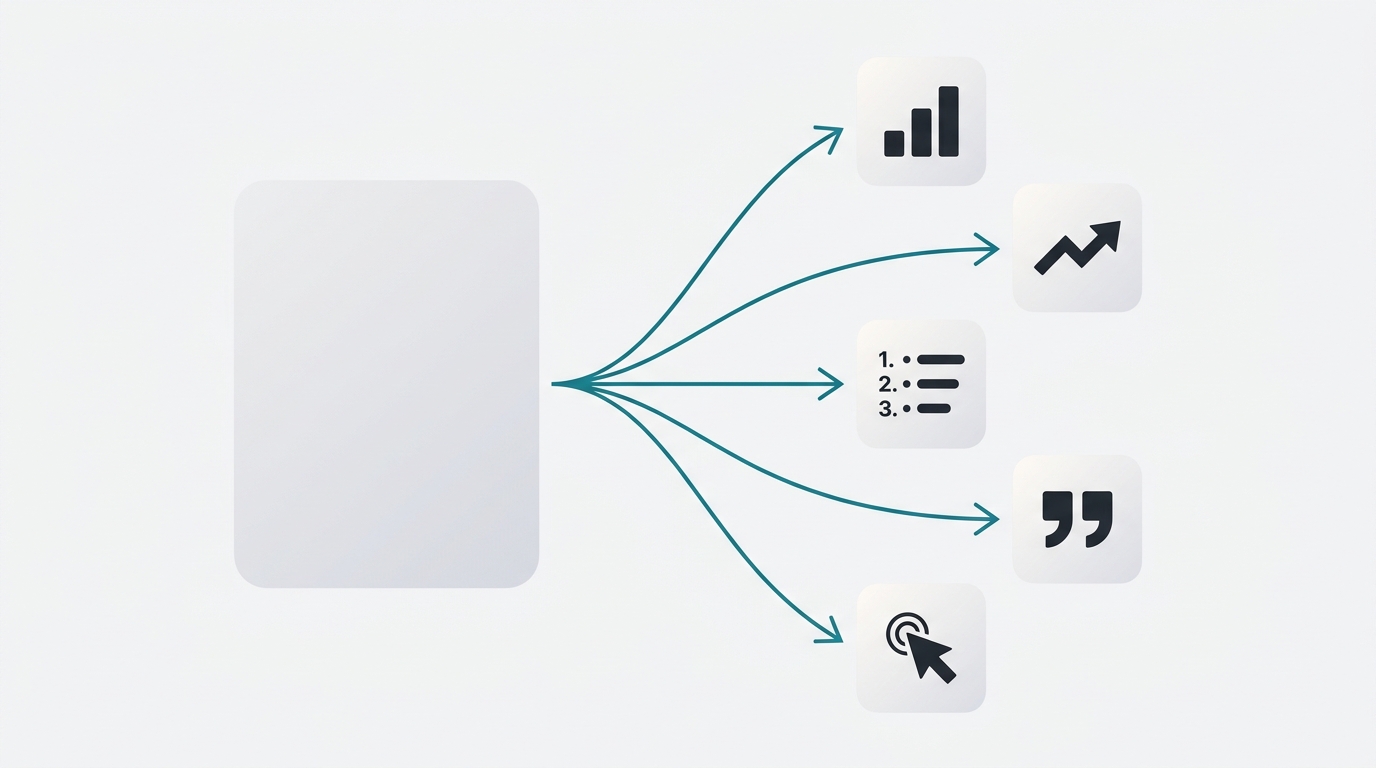
The social sequence is not one post. Buffer's 5-to-1 rule is the right frame: aim for at least five smaller social posts from every long-form piece (Buffer). Map each post to a specific claim or H2 section from the blog, not to the blog as a whole.
Five post types to extract:
- The stat post. One number, one sentence of context, source in the caption or first comment. Do not editorialize. Let the number do the work.
- The contrarian take. The thing your blog argues against conventional wisdom. "Most repurposing advice tells you to do more. The problem is usually the source post, not the volume."
- The process post. One H2 section turned into a numbered list. Three to five steps. No preamble.
- The quote pull. A verbatim line from the blog that works as a standalone sentence. If it reads well without the surrounding paragraphs, it's a candidate.
- The CTA post. Drives back to the full blog or your newsletter signup. Write it last. Earn it with the four posts above.
Platform adaptation matters here. LinkedIn rewards the full argument in the caption. The reader has two minutes and expects to be persuaded. X/Twitter rewards the single sharpest line with a thread for depth if you have it. Threads rewards the observation without the argument. The observation with the argument will feel like you copied a LinkedIn post and hit paste.
Voice preservation is the quality test. Read the social post. Then read the blog section it came from. Ask: does this sound like the same person wrote both? If the blog sounds like a founder talking through a hard-won insight and the social post sounds like a marketing team's Monday content calendar, the voice drifted. Fix it before you schedule.
Keeping Facts and Voice Intact Across All Three
The citation chain is the accountability structure for the whole pipeline. If a stat appears in the social post, it appeared in the newsletter, and it appeared in the blog with a URL. No new claims introduced downstream. No paraphrased versions of the number. No rounding.
Voice drift happens when the transformation is done by someone or something that hasn't internalized the brand. The fix is simple but takes five minutes upfront. Before you write the newsletter, pull three to five specific phrases from the blog: a sentence rhythm, a word choice, a construction that sounds like you. Apply them as a checklist to the newsletter and social drafts. "Does this sound like it came from the same person who wrote that line?" is a faster quality check than any rubric.
Most of those teams are starting from scratch for each channel. The pipeline solves the volume problem by making the blog the investment and the newsletter and social posts the returns. But the returns are only as good as the underlying asset.
One governance rule worth building in: if you update a fact in the blog because a source changed or a number got corrected, add a note to the newsletter archive and flag the relevant social posts. The blog is the source of record. When it changes, the downstream record changes too.
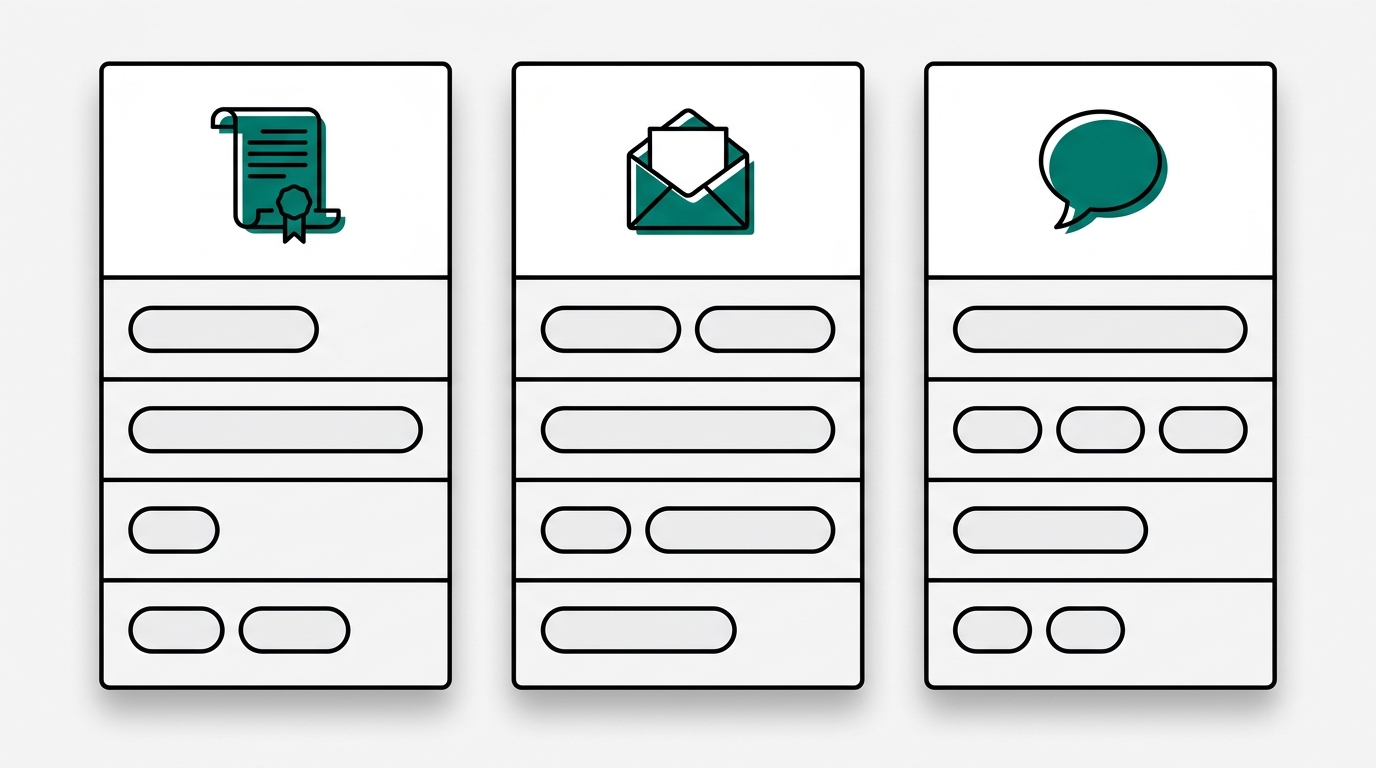
Running the Pipeline Without Losing a Week to It
Time budget per post, assuming the source blog is pipeline-ready: the blog is the full investment. The newsletter takes 30 to 45 minutes if the blog is solid and you're working from the reframe rules above. The social sequence takes 60 to 90 minutes for all five posts. Total downstream time under two hours.
CloudPresent's data is the case for making this repeatable: "Systematic content repurposing can boost your content reach by 300% by expanding visibility across audiences with different consumption preferences" (CloudPresent). That math only works if the pipeline runs consistently. One blog post through the pipeline once is an experiment. Ten blog posts through the pipeline every month is a content operation.
The sequencing matters as much as the pipeline itself. Publish the blog. Wait 48 to 72 hours before sending the newsletter. That window gives the post time to index and gives you a chance to see if any early traffic signals something worth amplifying in the newsletter hook. Run the social sequence over the following 7 to 10 days. One or two posts per day, not all five at once.
SeriesX shows this model working for SaaS clients specifically: one blog post fueling LinkedIn posts, email nurture snippets, scripts, and more from a single researched asset (SeriesX Marketing). The constraint in every case is the source post, not the transformation tools.
A note on AI assistance here. The transformation steps can be accelerated with an AI writing tool. Adapted prompts for each format conversion can reduce per-post adaptation time significantly. But the fact-check and voice-check are human steps. Every stat that moves from blog to newsletter to social needs a human eye on the source URL before it ships. Speed up the draft. Don't speed up the review.
FAQ
What if my blog post doesn't have cited stats? Can I still run the pipeline?
You can, but you'll hit the citation chain problem immediately. If a claim in the blog isn't sourced, you can't carry it downstream without attribution, and carrying it without attribution erodes trust in a newsletter or social post. The better fix is to add citations to the blog before you start the pipeline. That's also good for the blog's own credibility.
How do I know which H2 section to keep in the newsletter when I'm cutting for depth?
Keep the section that contains the insight you'd tell someone over coffee, not the section that exists for search coverage. SEO requires you to cover adjacent topics your reader might search for. Your newsletter subscriber isn't searching. They're reading because they trust you. Give them the sharpest thing in the post.
What's the right platform order for the social sequence?
Publish wherever your existing audience is largest first. That post will tell you which angle is landing. If the stat post gets shared and the contrarian take gets ignored, your next blog's social sequence should front-load the stat posts. The sequence is a data-gathering exercise as much as a distribution play.
Can I reverse the pipeline and start with a social post or newsletter first?
You can, and some founders do. But the risk is citation drift in the other direction: a social post turns into a newsletter that turns into a blog, and by the time you write the blog, the original claim has been restated enough times that the source is gone. Starting with the blog forces you to do the sourcing work once, upfront, when it's hardest and most valuable.
How do I handle a blog post that performed poorly on search? Is it still worth running through the pipeline?
Search performance and pipeline-ready status are different questions. A post can rank poorly because the keyword was too competitive or the domain authority wasn't there, and still contain a sharp thesis and well-sourced research. If the post has substance, run it through the pipeline. The newsletter and social audiences find content differently than search does.
Sources
- Bit Social: Content Repurposing Can't Ignore It
- HubSpot: Marketing Statistics
- ClearVoice: Guide to Repurposing Content for SEO
- DigitalApplied: One Piece, Ten Formats Guide
- Buffer: Repurposing Content Guide
- CloudPresent: The Complete Guide to Repurposing Content
- Siege Media: Content Repurposing Strategy
- SeriesX Marketing: Content Repurposing
Pick one blog post you published in the last 90 days. It needs one cited stat and a thesis you can write in a single sentence. Write the newsletter reframe today using the hook rewrite and depth adjustment rules above. Extract the five social posts tomorrow. Send the newsletter this week, run the social sequence over the next 7 to 10 days. That's the full pipeline, live, from one post you already wrote.
If you want that source blog to be pipeline-ready from the first draft, researched, cited, and written in your voice before you ever open a newsletter draft, that's exactly what Ryterr builds for you.