


Editorial QA Checklist for AI-Assisted SEO Blogs
A post that reads smoothly can still get you in trouble. The URL 404s. The stat doesn't appear on the page the draft linked to. The second paragraph sounds like a press release, not like you. That's the specific failure mode that kills AI-assisted blog credibility: not spelling errors, not missing headers, but broken trust at the factual level.
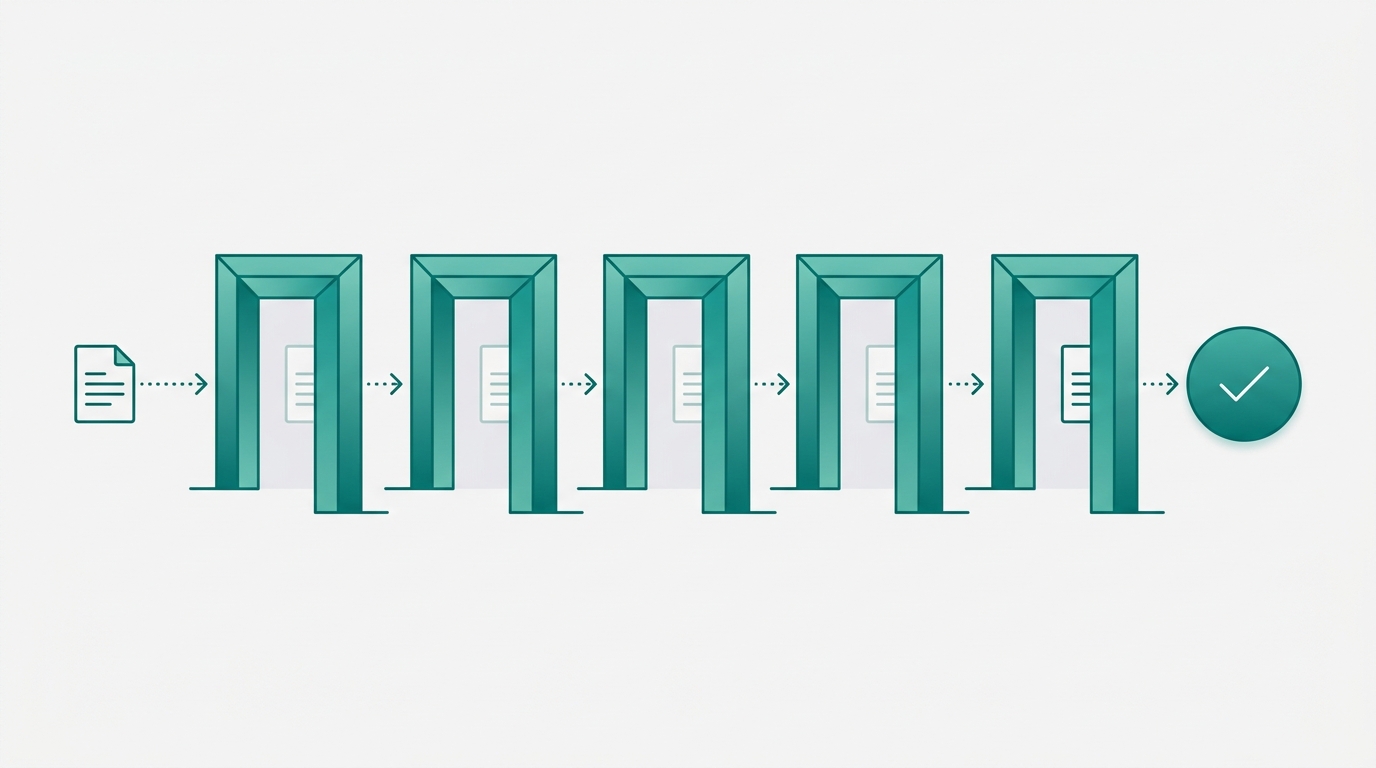
The checklist below is five gates. Run them before you hit publish. Each one has a concrete pass/fail criterion so you're not guessing whether the post is ready.
Why AI Drafts Need a QA Gate (Not Just a Proofread)
A spell-checker can't tell you whether a cited URL actually exists. Grammar tools won't catch a real URL that links to a page where the quoted stat never appears. These are the errors that matter most, and they're the ones most likely to survive a casual proofread.
The Authors Guild AI Best Practices guide flags this directly: AI outputs require thorough fact-checking because large language models confidently produce plausible-sounding claims that are often unverifiable. The model doesn't know it's wrong. The output looks authoritative. That's the problem.
There's also a gap in what AI can self-audit. It can check structure, keyword density, and sentence length. It cannot open a citation and confirm the number on page 12 of the PDF matches what it wrote in the draft. That distinction is the whole reason this checklist exists.
Many competing articles on AI writing workflows describe the generation side. Fewer of them describe what happens between "generated" and "published." That gap is where credibility is won or lost.
Gate 1: Accuracy — Every Claim Needs a Real Source
The acceptance criterion is simple: every non-obvious factual claim links to a primary source you have opened and read. Not a link you assume works. Not a URL the AI suggested. A page you loaded, found the number on, and confirmed matches what the draft says.
The three most common accuracy failures in AI drafts:
- Fabricated URLs. The link looks real, the domain exists, but the specific page 404s or redirects to a homepage.
- Real URLs with misquoted stats. The source is legitimate, but the draft says "47%" and the actual figure in the report is 41%.
- Outdated numbers presented as current. The stat is from 2019. The draft says "recent research shows."
The PMC checklist paper on LLM reporting standards calls for transparent disclosure of LLM use and explicit verification steps as part of responsible publishing. That's not just academic guidance. It's the bar your readers will eventually hold you to as AI-generated content becomes more common and more scrutinized.
The verification workflow is three steps. Open each citation. Confirm the stat appears verbatim or that your paraphrase matches what the source actually says. Replace dead links before publishing, not after a reader emails you about them.
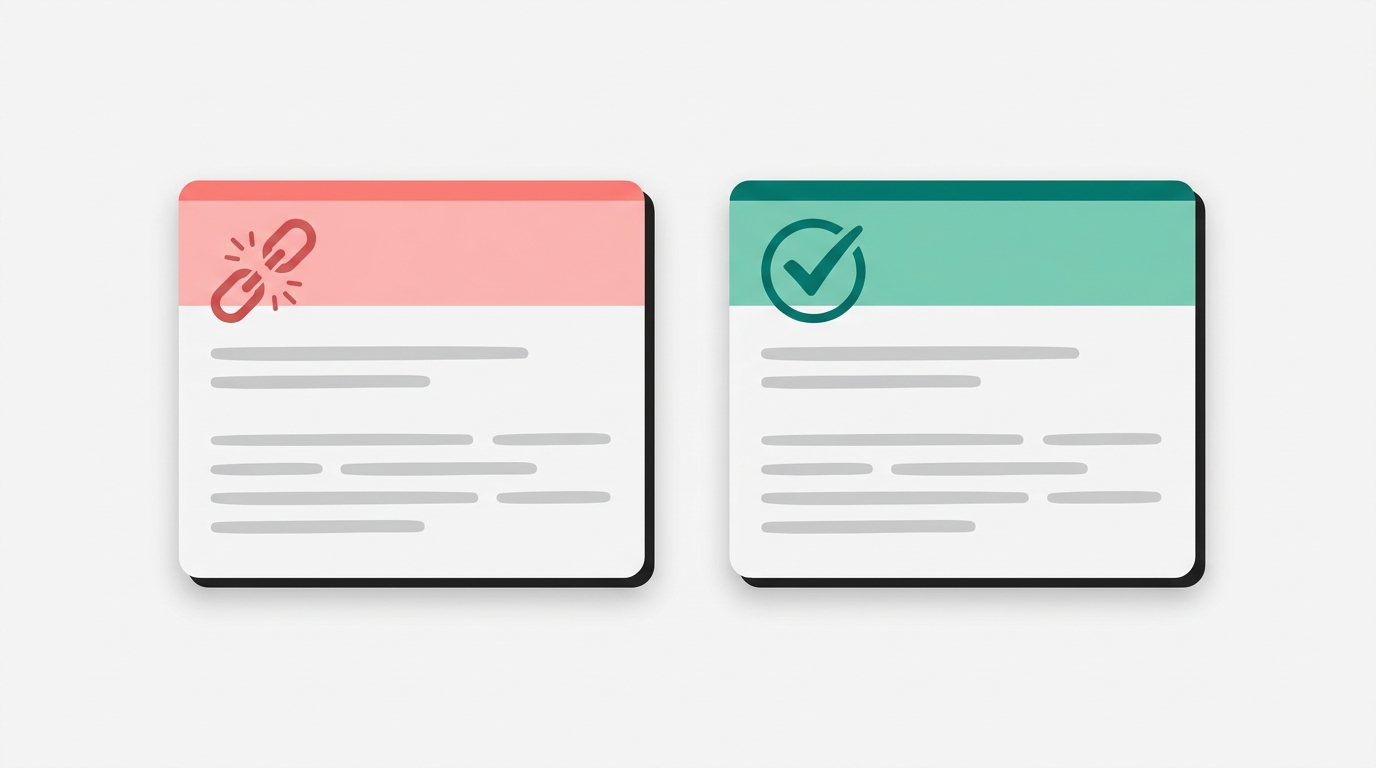
Fail example: "According to a 2023 HubSpot report, 47% of marketers prefer short-form video." The link 404s. The number doesn't appear anywhere on the domain.
Pass example: Same claim. The URL opens. The stat is on page 12. The paraphrase matches. The year in the source matches the year in the draft.
Gate 2: Originality — Protect Your Byline
Originality matters beyond plagiarism detection. Google's helpful content system rewards first-hand perspective and penalizes thin rewrites of existing SERP results. A post that covers the same angle, uses the same examples, and follows the same structure as the top-ranking result is a structural clone, even if it's technically original text.
There are two originality failure modes to check:
- Verbatim lifting. Detectable with a plagiarism tool. This one is easy to catch.
- Structural cloning. Same angle, same examples, same order as a top-ranking competitor. No tool catches this reliably. You have to read the top three results and compare manually.
The Originality AI review makes the point that quality scoring and originality detection are separate dimensions that both need to pass. A post can score high on readability and still be a thin rewrite. The gates are not interchangeable.
The checklist for this gate:
- Run a plagiarism check on the full draft before publishing.
- Open the top three SERP results for your target keyword. Compare your H2 structure against theirs.
- Confirm at least one section in your post contains a data point, example, or perspective not present in any competing article.
AI can flag sentences that closely mirror common patterns in training data. What AI cannot do is confirm that your post adds a genuinely new angle to the conversation. That judgment call belongs to you.
Gate 3: Readability — Write for Humans, Score for Algorithms
Set a concrete target: Flesch-Kincaid Grade Level 8 or below for most B2B SaaS blogs. Sentences averaging under 20 words. Paragraphs capped at four sentences.
AI drafts tend to fail readability in four specific ways:
- Passive voice stacking. "The report was analyzed by the team, and the findings were reviewed."
- Nominalization chains. "The utilization of a systematic editorial review process" instead of "using a QA checklist."
- Transition-word overload. "Furthermore," "moreover," "additionally" stacked across consecutive sentences.
- Uniform sentence length. Every sentence is 18-22 words. Reads like a list, not a human.
The checklist: paste the draft into a readability scorer. Flag every sentence over 30 words for a manual rewrite. Read the first paragraph aloud and count how many times you pause or lose the thread.
Readability is one gate where AI assistance is genuinely useful. Tools can return grade level and passive voice percentage in seconds. The rewrites, though, have to be yours. Asking the AI to rewrite for clarity often just regenerates the same sentence structure at a slightly shorter length.
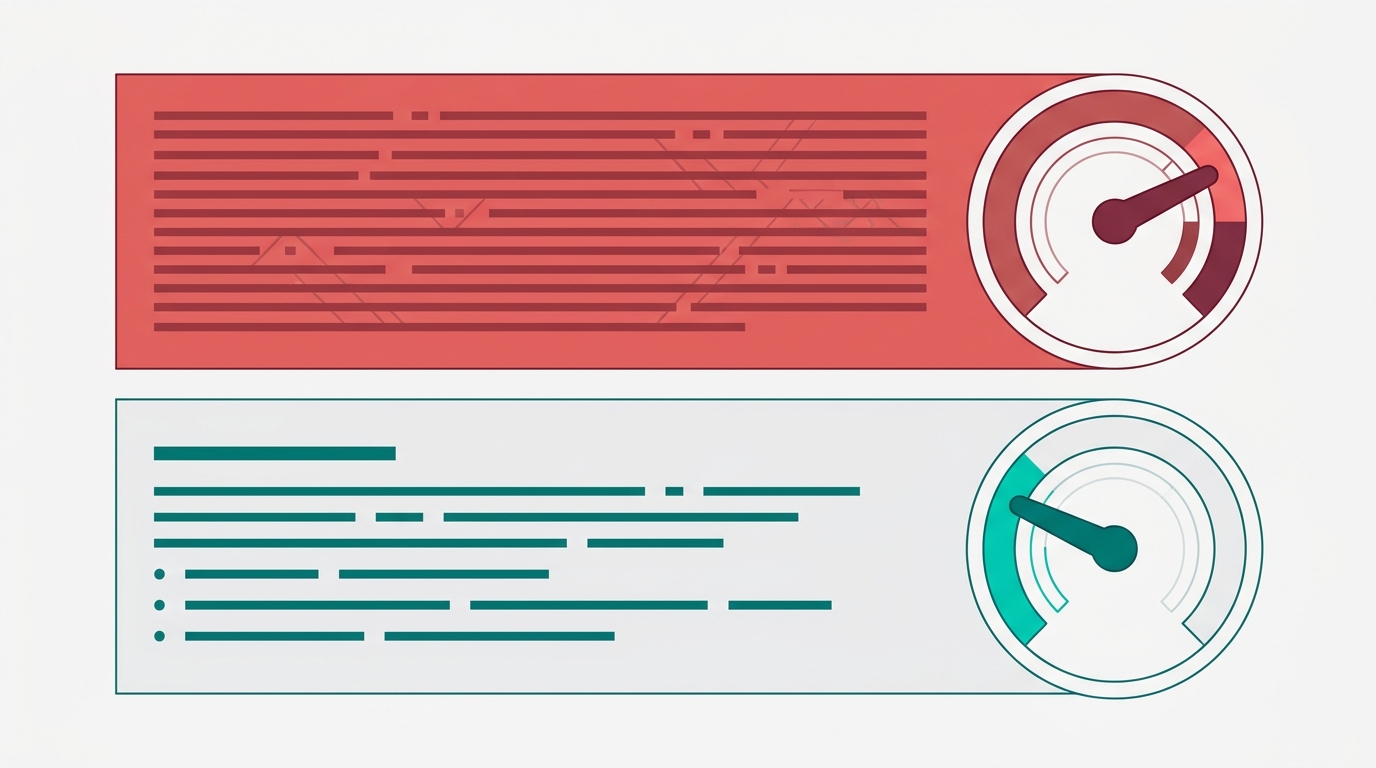
Fail example: "The implementation of a systematic editorial review process enables the facilitation of higher-quality content outputs." Grade level 16. Nobody talks like that.
Pass example: "A QA checklist before you publish catches errors a proofread misses." Grade level 6. Done.
Gate 4: Brand Voice — Does It Sound Like You Wrote It?
Voice consistency is a QA criterion, not a style preference. Readers who follow a founder's blog develop a calibrated expectation. A post that suddenly sounds like a press release breaks something harder to fix than a broken link.
Three voice failure signals in AI drafts:
- Hedging phrases. "It's worth noting that," "it should be mentioned," "arguably."
- Filler transitions. "In conclusion," "to sum up," "as we've seen."
- Hype words the brand never uses. Words like "revolutionary," "game-changing," or any of the other terms on your internal banned list.
The checklist for this gate: read the draft against three posts you've already published and are proud of. Flag any sentence you would never say out loud in a conversation. Confirm the opening sentence doesn't start with a definition or a history lesson.
Human review is non-negotiable here. There is no tool that can tell you whether the draft sounds like you. A founder has to read it and ask: "Would I say this?" If the answer is "probably not," rewrite the sentence.
A concrete style guide makes this faster. Not a vague "be conversational" note, but actual phrases you use, words you never use, and editorial decisions written out explicitly (for example: "when choosing between clever and direct, we pick direct"). Ryterr uses exactly this kind of guide internally to anchor every generated post to a real voice. The principle applies regardless of what tool you're using.
Gate 5: SEO Integrity — Keyword Fit Without Stuffing
This gate is about confirming technical SEO basics are handled cleanly, without keyword stuffing that reads as machine-written.
The primary keyword should appear in the H1, one H2, the first 100 words, and the meta description. That's four placements. Nowhere else by force. If it shows up naturally in the body, fine. Wedging it into every paragraph is not fine and Google's systems are good at detecting it.
The w3era guide on AI-assisted SEO makes the case for semantic keyword clusters: the post should cover the topic's supporting terms naturally, not mechanically repeat the exact-match phrase. Write the post well and the semantic coverage tends to take care of itself.
The checklist for this gate:
- Confirm internal links point to relevant pages, not just the homepage.
- Verify every external link opens in a new tab and resolves correctly.
- Check that the meta description is under 160 characters and reads like a sentence, not a keyword list.
- Search your own domain for the target keyword before publishing to confirm you're not cannibalizing an existing post.
Cannibalizing your own content is the most commonly skipped check. If you've already ranked a post for a keyword, publishing a second post targeting the same term splits your authority rather than building it.
The Full Checklist: Print It, Run It, Ship It
| Check | Acceptance Criterion | Who runs it |
|---|---|---|
| Every citation URL resolves | Open each link, confirm the stat is on the page | Human only |
| Stats match source | Paraphrase matches what the source actually says | Human only |
| No outdated numbers | Dates in source match dates in draft | Human only |
| Plagiarism scan passes | No flagged verbatim matches above 3% | AI-assisted |
| Structure is original | H2s don't mirror top 3 SERP results | Human only |
| At least one unique data point | Something in the post isn't in any competitor article | Human only |
| Grade level 8 or below | Readability scorer confirms | AI-assisted |
| No sentences over 30 words | Flagged and rewritten | AI-assisted |
| No passive voice stacking | Under 10% passive sentences | AI-assisted |
| Voice matches existing posts | Read against 3 published posts you own | Human only |
| No banned phrases or hedging | Zero flagged words from your banned list | AI-assisted |
| Opening sentence passes | Not a definition, not "in today's..." | Human only |
| Keyword in H1, one H2, first 100 words | Confirm manually | AI-assisted |
| Meta description under 160 characters | Character count confirmed | AI-assisted |
| No keyword cannibalization | Site search shows no existing post targeting same term | Human only |
| All links resolve | No 404s or redirects to homepage | AI-assisted |
The minimum bar: a post that passes all five gates ships. A post that fails any accuracy or originality check does not ship, regardless of how strong the prose looks. Good writing wrapped around a fabricated stat is still a fabricated stat.
FAQ
What's the fastest gate to run first?
Start with broken link checking. It takes under two minutes with a free tool, and it's the most common failure mode in AI drafts. If citations are broken, nothing else matters until those are fixed.
Can I skip the structural originality check if my topic is genuinely new?
If the keyword has no existing SERP results with real content, you can deprioritize the structural comparison. But most B2B SaaS topics have at least three strong competing posts. Check before you assume you're writing into a vacuum.
How do I handle a claim the AI generated but I can't verify?
Remove it or go qualitative. "Many SaaS founders undercharge" is a defensible qualitative claim. "73% of SaaS founders undercharge" is only defensible if you have the source open and the number matches. If you can't verify it, cut the specific number and keep the observation.
Is a Flesch-Kincaid Grade Level 8 realistic for technical SaaS content?
Yes, and it doesn't mean dumbing the content down. Grade level is driven by sentence length and syllable count, not technical depth. You can explain a complex concept in short sentences. "Rate limiting caps API calls per second" is Grade 7 and technically precise.
Does this checklist apply to posts I write myself, not just AI-generated drafts?
The accuracy and SEO gates apply to any published post. The originality and readability gates matter most for AI drafts because those are where the failure modes concentrate. For human-written posts, the voice gate is usually less of an issue, but the citation verification step is just as important.
Sources
- Authors Guild AI Best Practices for Authors
- PMC LLM Checklist and Reporting Standards
- Originality AI Review
- w3era: How to Use an AI Article Writer for SEO
Run this checklist on your next draft before you hit publish. If you want the accuracy and readability gates handled automatically, with every citation verified against a live source and a five-dimension quality score attached to the draft, that's exactly what Ryterr runs on every post it generates. The receipts are visible. The citations are real. The score is there before you export.