

A Repeatable Outline System for SaaS Content That Actually Ranks
Most founders treat the outline as a formality. You jot down four or five headings, paste them into a prompt, and wait for the draft. Then you spend the next two hours fixing what came back. The draft wasn't the problem. The outline was.
The outline is the unit of work. Every structural flaw in a finished post, thin sections, missed search intent, fabricated citations, was present in the outline before the first sentence was written. Fix the outline and you fix the draft. Skip the outline and you're editing backwards.
This post is for founders publishing one to four posts per week under their own name. You care that citations are real because your name is on it. You don't have time to rebuild the outline system every week from scratch. What you need is a reusable, scoreable outline schema that runs on a schedule. That's what this covers.
Why Your Outline Is the Bottleneck, Not Your Draft
Most AI writing failures trace back to a weak brief or no outline at all. The model isn't the problem. The input is.
The outline determines heading structure. Heading structure can influence how a post is organized for readers and search engines. It may also affect which posts are more likely to be surfaced in AI Overviews. Posts that get cited by AI Overviews often have clear, structured, source-backed claims at the section level. That structure has to be planned before drafting, not retrofitted after. (mrrunlocked.com)
Solo founders skip outlining because it feels like extra work before the real work. That framing is wrong. A reusable outline template can cut per-post time significantly, because it eliminates the back-and-forth of fixing a draft that was built on shaky bones.
The draft, the fact-checking, the SEO pass, all of it is downstream of the outline. Get the outline right and everything else follows. Get it wrong and nothing downstream fixes it.
The Four SaaS Content Types That Need Their Own Outline Schema
Not all posts are the same shape. A comparison page has a different skeleton than an educational guide. Treating them the same way is why most SaaS content feels generic regardless of the topic.
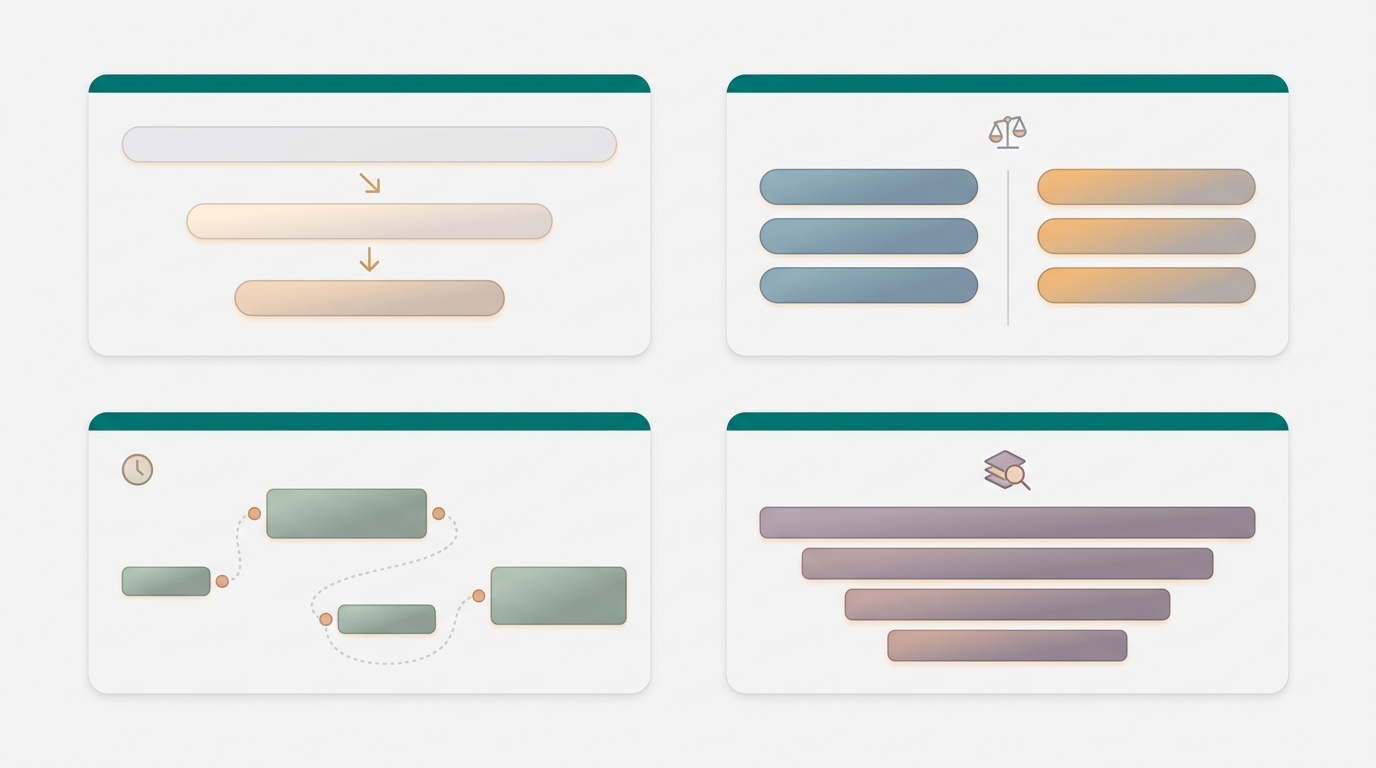
There are four non-fiction formats that recur across the funnel:
- Educational guides (TOFU): Problem definition, concept explanation, step-by-step process, common mistakes, resource list
- Comparison and alternative pages (BOFU): Problem framing, feature table, objection block, verdict, CTA
- Case studies (MOFU/BOFU): Customer context, before state, specific intervention, measurable result, direct quote
- Feature deep-dives (MOFU): Use case, how-it-works, real example, limitations, next step
Each format has a fixed skeleton. Required sections, required evidence types, required CTAs. These aren't creative decisions you make fresh each week. They're structural decisions you make once and reuse.
The comparison post is a good example. The problem framing section answers why someone is evaluating at all. The feature table gives them a scannable side-by-side. The objection block handles the obvious pushback before the reader raises it. The verdict is direct, not hedged. The CTA follows immediately. Comparison tables, objection handling, and proof blocks are reusable structural components, not one-off choices. (mrrunlocked.com)
Most content advice treats these formats interchangeably. A system covers all four types with distinct schemas, not just whichever format happens to be trending. (airticler.com)
How a Transparent AI Agent Builds the Outline From SERP Data
The outline shouldn't start with brainstorming. It should start with SERP analysis.
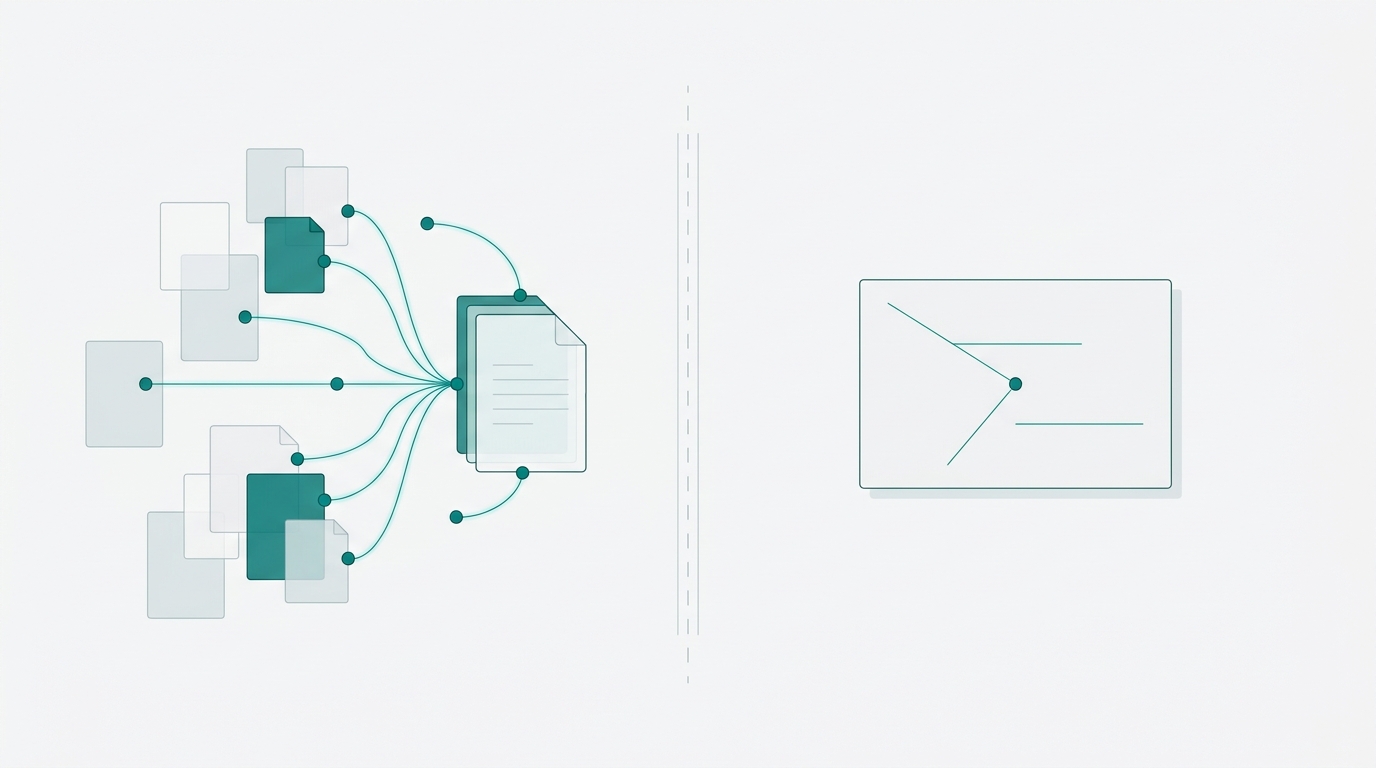
Step one: pull the top 5-10 ranking URLs for the target keyword. Extract their H2 and H3 structure. Identify which sections appear in three or more of them. That's the baseline the outline must meet. Not match exactly, but address. If every ranking post covers "how to choose a pricing model" and yours doesn't, you're missing the section Google already knows the searcher wants.
A systems approach connects ideation to briefs to outlines automatically, rather than treating each as a separate manual step. (jenova.ai) The agent does the SERP pull, maps competitor structures, and hands you a baseline outline before you've typed a single word.
Step two is gap detection. The agent flags two things: topics that appear in competitor outlines but are handled thinly, and topics that appear in none of the competitors but match the search intent. The first is your chance to go deeper. The second is your differentiation.
This is where the black-box approach breaks down. A one-shot prompt returns a draft with no visibility into why sections were chosen. You can't tell if the structure came from SERP analysis or pattern-matching on training data. A transparent agent shows you the competitor sections it analyzed and the gaps it identified before a single word of draft is written.
The concrete output is a scored outline with section-level notes: why each H2 is included, what evidence is needed to support it, and which competitor posts were used as the baseline.
The Five-Dimension Quality Score Applied at Outline Stage
Quality scoring usually happens after the draft. That's too late.
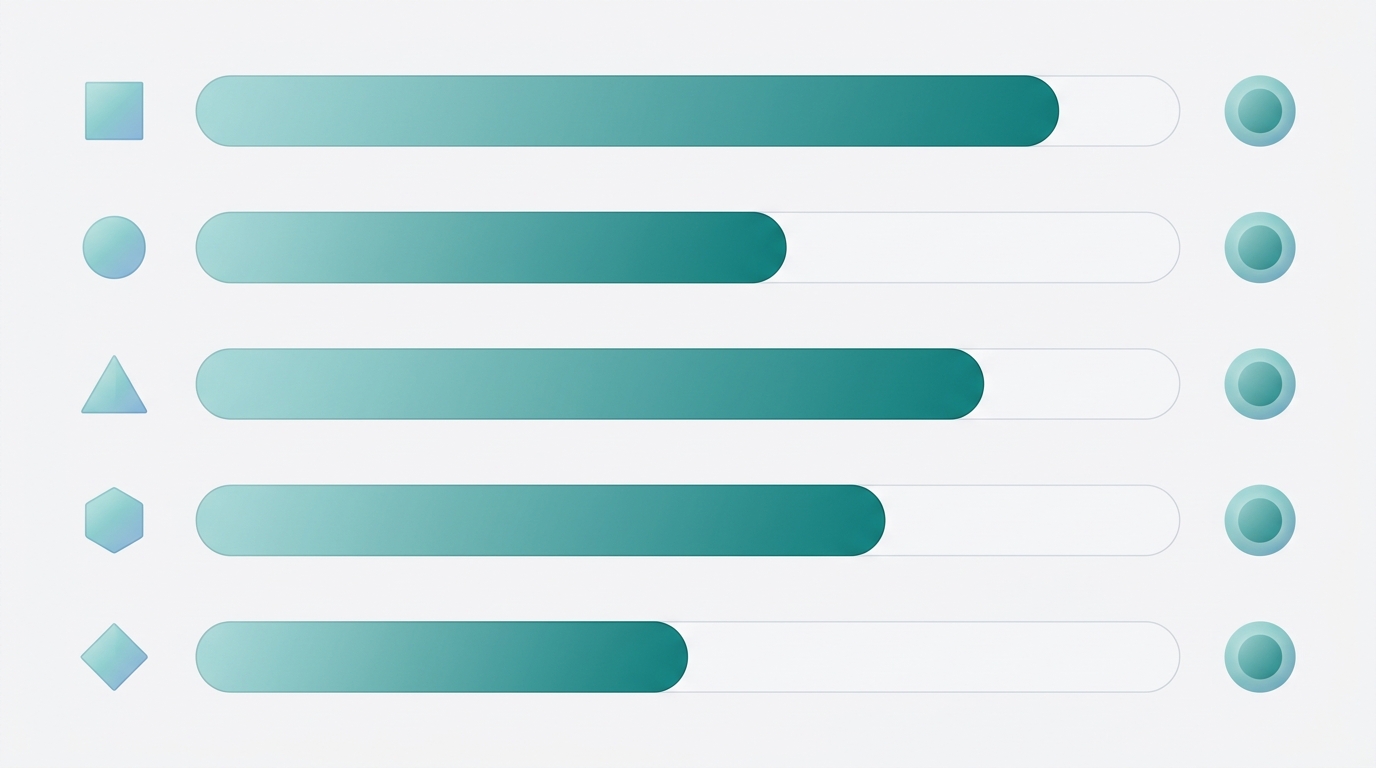
The five dimensions are:
- Depth: Does the outline cover the topic completely for the stated funnel stage?
- Evidence: Does each section have a specific stat, case study, or quote assigned?
- Structure: Does the heading hierarchy match how Google parses the topic?
- Brand voice: Do section titles and framing match your established tone?
- Search intent fit: Does the outline answer the query a real searcher typed?
Measuring idea quality and potential impact before committing to the draft is the right instinct. (jenova.ai) Extend that to outline quality and you get something actionable: a score of 3 out of 5 on evidence at outline stage means the draft will fail fact-checking. Fix it before the draft starts, not after you've written 800 words on a section that has no supporting source.
A black-box prompt gives you a draft and a vague sense that it "looks good." A five-dimension score gives you a number, a reason, and a specific fix.
Most content tools don't score outlines or track improvement over time. (airticler.com) A real system tracks scores across posts and surfaces patterns. If your evidence scores trend low every time you write TOFU content, that's a signal, not a coincidence.
Fact-Checking and Citation Standards Start at the Outline, Not the Draft
Every section in the outline needs a citation slot before drafting begins. If a section can't be supported by a real, linkable source, it either gets cut or gets reframed as opinion and labeled as such. No exceptions.
Posts that get cited by AI Overviews have structured, source-backed claims at the section level. That structure has to be planned at the outline stage. You can't retrofit citations onto a draft that was written without them. (mrrunlocked.com)
The agent's job at this stage: for each section, run a live web search, return two or three candidate sources, and flag any section where no credible source exists. That's the fact-check gate. If the gate fails, the draft doesn't start.
This is the clearest difference between black-box and transparent AI writing. Black-box AI fabricates citations because it has no mechanism to check whether a URL exists before writing it into the text. A transparent agent shows you the source before it writes the sentence. That's what "real citations, no fabricated URLs" actually means in practice.
The practical output is an outline where every bullet has either a confirmed source attached or a [NEEDS SOURCE] flag. That flag blocks the draft. It's not a suggestion. It's a gate.

The Weekly Ritual: From Outline System to Published Post in One Session
A system without a ritual is just a template. The outline schema works only if it runs on a schedule.
One 60-minute session, same day each week. Here's the breakdown:
- Phase one (10 min): Pick the week's topic from a pre-built queue. Run the SERP pull. Get the scored outline back.
- Phase two (15 min): Review the outline. Approve or adjust sections. Confirm citations are real and attached.
- Phase three (25 min): Review the AI draft against the outline. Check that every section matches its assigned evidence and doesn't drift from the structure.
- Phase four (10 min): Export to markdown with SEO frontmatter. Publish.
Most content advice skips the operational detail. It describes what to do but not how to run it as a repeatable weekly practice. (jenova.ai) A system needs a clock, not just a checklist.
Name the tradeoff honestly: this takes 60 minutes per post, not 5. The outline system can cut it from roughly 3-4 hours, not from zero. The compression comes from having a scored outline and confirmed citations before the draft phase starts, so you're reviewing instead of building from scratch.
If that 60-minute number sounds high for "AI-assisted" content, it's because most of what saves time is preparation, not generation. The agent handles the SERP pull, the competitor analysis, the gap detection, and the citation sourcing. Your 60 minutes goes toward decisions, not research.
FAQ
Does this outline system work if I only publish once or twice a month?
Yes, but the payoff is different. At one or two posts per month, the schema saves you the setup cost each time you sit down to write. You won't need to redecide what a comparison post looks like or how to structure a case study. The reuse value compounds faster at higher publishing frequency, but even low-volume founders benefit from not reinventing the structure every time.
What if my SERP analysis shows that competitors are all using the same weak structure?
That's an opportunity, not a constraint. The baseline tells you the minimum to meet. If every ranking post is thin on evidence or skips the objection-handling section, you can build a stronger outline by adding what they're missing. The SERP pull tells you where the bar is. You decide whether to clear it or raise it.
How do I handle a topic where I genuinely can't find real sources for a section?
Cut the section or reframe it as opinion. If you're writing from experience, say so explicitly and don't present it as a sourced claim. The [NEEDS SOURCE] flag in the outline is designed for exactly this situation. It forces the decision before the draft starts, not after you've written 400 words you'll have to cut.
Can I use this system for product-led content, or is it only for educational posts?
All four content types in the schema apply to product-led content. Feature deep-dives are explicitly product-led. Comparison pages are where your product typically enters the conversation most directly. The schema doesn't change based on whether the product appears in the post. The structural rules (evidence slots, citation gates, quality score) apply regardless.
What's the right queue size for the pre-built topic queue?
Four to six weeks of topics is enough to stay ahead without over-planning. A longer queue gets stale because search intent shifts and new competitors enter the SERP. Review the queue monthly, prune topics that have shifted, and add replacements. The queue should feel like a short backlog, not a six-month content calendar.
Sources
- How to Create Human-Sounding AI Content That Converts (Airticler)
- AI Content Ideation 2026 (Jenova.ai)
- BOFU Content System 2026 (mrrunlocked.com)
Pick one post you've been putting off. Pull the top five ranking URLs for the keyword. Map their H2 structures. Assign one real source to each section before you write a word. That first scored outline is the whole system in miniature. If you want the SERP pull, gap detection, citation sourcing, and quality scoring handled automatically, that's what Ryterr does. Run the pipeline once and you'll see exactly what a transparent outline system looks like before the draft ever starts.