


Topic Cannibalization: A Playbook for Clusters and Canonicals
A founder publishes eight posts: "email marketing for SaaS," "SaaS email marketing tips," "email marketing strategies for SaaS founders," "best email marketing for SaaS startups." Different titles. Same intent. Six months later, none of them rank. They're splitting clicks, splitting authority, and confusing Google about which URL to send traffic to.
That's cannibalization. And the fix isn't an audit after the damage is done. It's a map you build before you write post one.
This post gives you that system: a keyword-to-URL map, a cluster architecture, a four-action decision tree for existing overlaps, and a governance rule that keeps the library clean as it grows.
Why Two Posts Beat Each Other Instead of Competing Pages
Cannibalization is simple to define: two URLs targeting the same query, splitting click-through and authority instead of stacking it. Google has to pick one to rank, it can't decide, and it ends up oscillating between them. Neither page builds momentum. (tryvizup.com)
The compounding damage is what makes it expensive. When two pages share a target query, internal links that should reinforce one page now dilute across two. Backlinks, if you earn any, split. Topical authority, which is what drives long-term visibility, gets divided instead of concentrated. (onely.com)
The distinction worth keeping: same topic, different intent is fine. A post on "what is email deliverability" and a post on "best email deliverability tools" share a topic but serve different intents. That's healthy. Same topic, same intent is the problem. Google reads intent as the real signal, and when two pages send the same signal, it can't differentiate them. (sureoak.com)
Build the Keyword-to-URL Map Before You Publish Anything
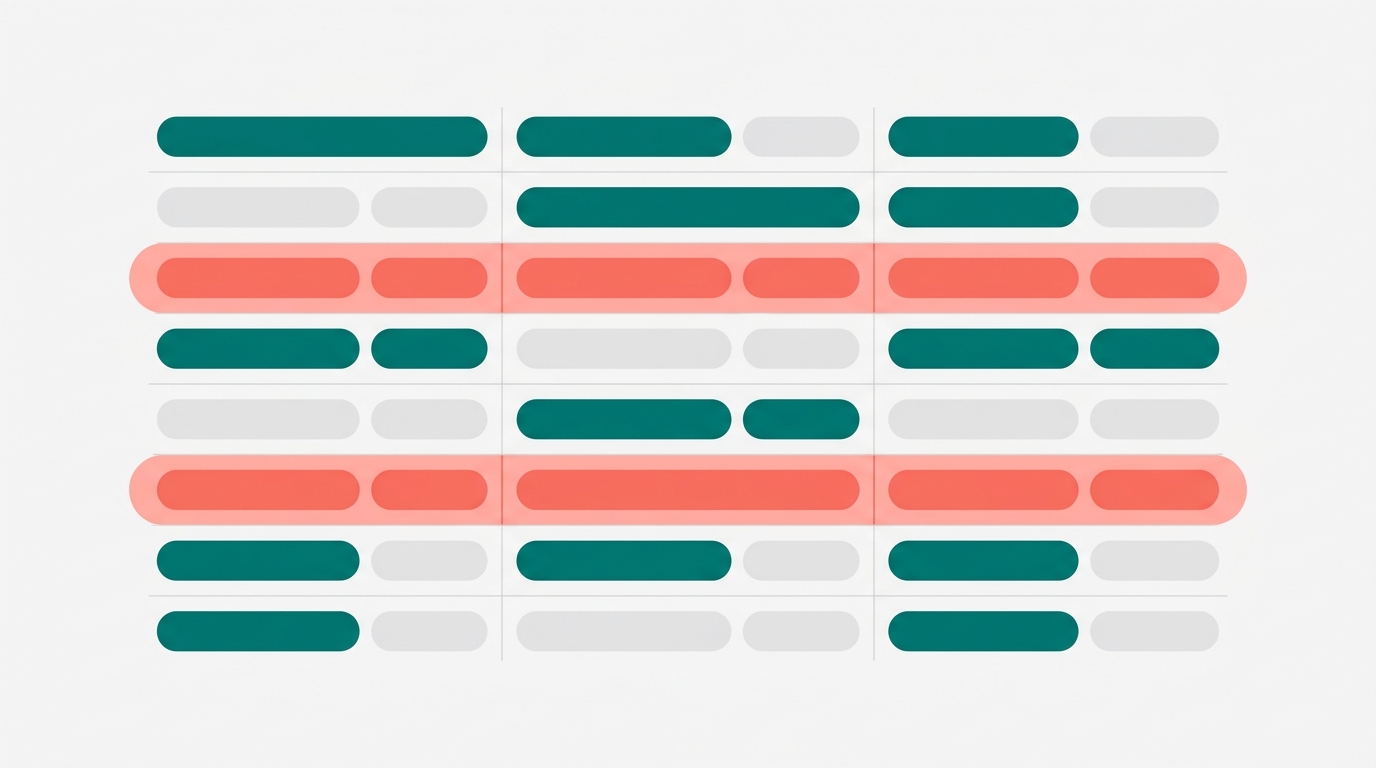
One spreadsheet, three columns:
- Target keyword (the primary query this page should rank for)
- Assigned URL (the canonical destination for that query)
- Primary intent (informational, commercial, or transactional)
Keep it to three columns. The goal is friction-free maintenance, not a database.
The key rule: assign one URL per intent cluster, not per keyword variation. "Best email tools" and "top email marketing software" are different phrasings of the same intent. They belong on the same row, pointing to the same URL. Spawning a separate page for each variation is how cannibalization starts. (digitalapplied.com)
The map's primary function is the flag. Any time two rows in the "assigned URL" column point to different URLs but share the same intent label, you have a conflict. That flag is your intervention point, and you want to catch it before either post goes live. The same logic applies whether you're building a SaaS blog or a local page network: one page per intent, catch duplicates before they go live. (clickyowl.com)
The map is also how you know when to stop creating content. When every viable intent already has a URL, additional posts won't compound your rankings. They'll split them.
Assign One Intent Per Page: The Cluster Architecture
A pillar page owns the broad head term and links down to cluster posts. Each cluster post owns a specific long-tail intent and links back up to the pillar. Link equity flows through the structure instead of pooling randomly. Flat architectures, where every post lives at the same depth with no clear hierarchy, create cannibalization because there's no signal about which URL should own the head term. (digitalapplied.com)
Each cluster post earns its existence by answering a question the pillar doesn't fully answer. If the pillar already covers it, you don't need the cluster post. Publishing it anyway creates the exact overlap you're trying to avoid. Building fewer, more comprehensive topic pages beats duplicating content across thin variations. (onlinepresence.io)
Here's a practical test you can apply to every URL in your library: write one sentence starting with "this page is for someone who wants to..." If two pages produce the same sentence, one of them needs to change. This intent-matching question is the diagnostic test for whether a page earns its existence in the cluster. (sureoak.com)
Run that test before you write. Not before you publish. Before you write.
When Overlap Already Exists: The Four-Action Decision Tree
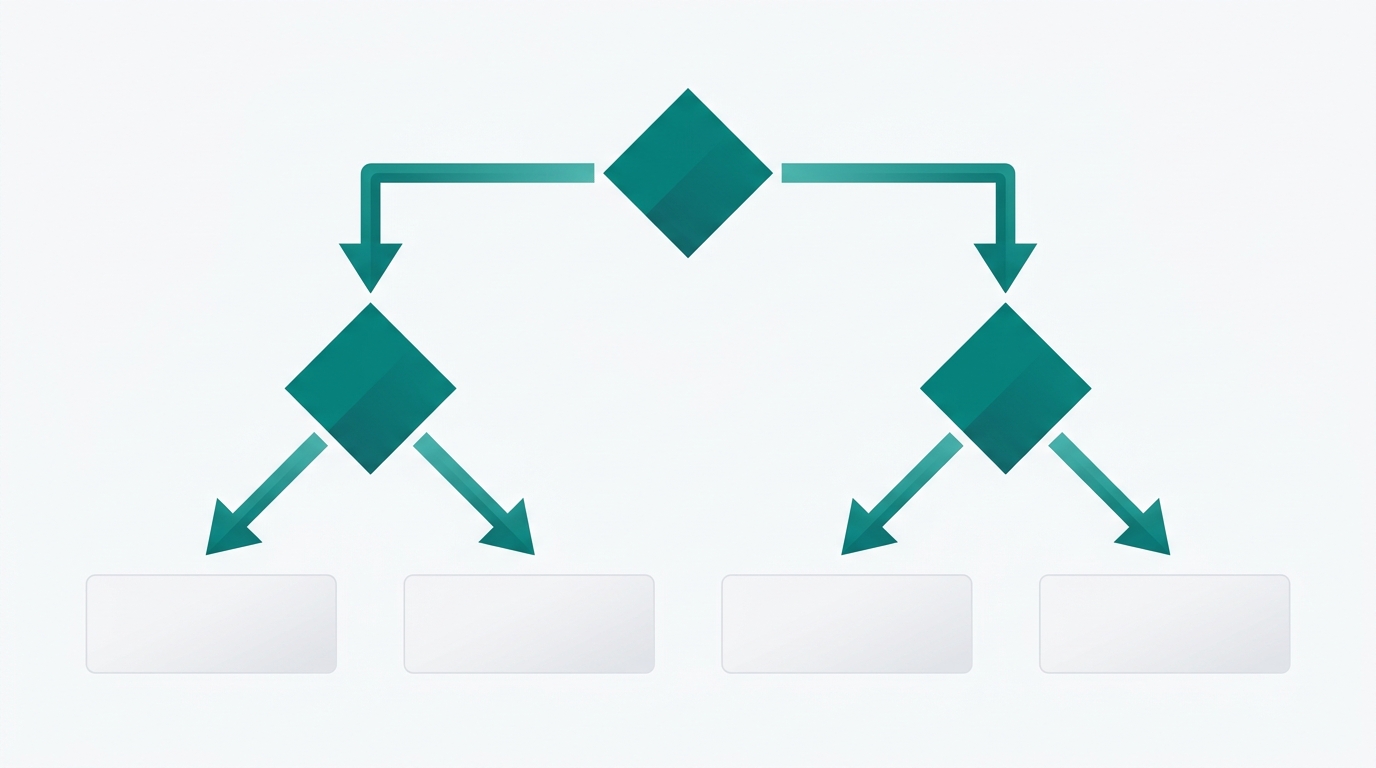
If the map reveals existing conflicts, you have four options. Choosing the wrong one wastes the authority you've already built.
Action 1: Consolidate. Merge the weaker page into the stronger one via 301 redirect. This is the right call when both pages target the same intent and neither has strong backlinks worth preserving separately. It's the first-choice fix for true duplicates because it concentrates authority instead of splitting it. (clickyowl.com)
Action 2: Canonical. Keep both URLs live but point the duplicate to the primary with rel="canonical". Use this when the duplicate has a legitimate reason to stay live, such as syndication, parameter-based URLs, or print versions. The canonical tag tells Google which version to count without deleting the secondary URL. (clickyowl.com)
Action 3: Noindex. Remove the page from the index without deleting it. This works for thin pages that serve a UX purpose but add no ranking value. The page stays accessible to users but stops competing for rankings. (clickyowl.com)
Action 4: Differentiate. Rewrite one page to serve a clearly different intent. Use this when both pages have real authority and the intents can be separated cleanly. If consolidating would destroy topical depth you've worked to build, differentiation is the better path. (onely.com)
The decision sequence: check intent first. If the intents are identical, consolidate. If there's a reason the URL needs to stay crawlable, canonical. If the page is thin and exists for UX only, noindex. If both pages have authority and the intents can be separated, differentiate.
Don't mix them. A page can't have a rel="canonical" pointing elsewhere and also be indexed as a unique resource. Pick one action per URL pair and commit.
Internal Linking as a Cannibalization Signal and Fix
Internal links are the clearest cannibalization signal hiding in plain sight. If two different pages receive the same anchor text from internal links across your site, you're sending Google a contradictory signal: two URLs, one intent. That inconsistency dilutes the intent signal for both pages. (digitalapplied.com)
After a 301 redirect, update every internal link pointing to the old URL. Leaving them in place creates redirect chains that waste crawl budget and slow authority transfer to the canonical destination. (digitalapplied.com)
The structural rule: the pillar page is the single internal link target for the head term. Cluster posts link up to the pillar. They don't link to each other using the same anchor text the pillar owns. Hub-and-spoke is cleaner than mesh linking for cluster topics because it gives Google an unambiguous signal about which URL owns the authority for the broad term. (digitalapplied.com)
A quick way to audit this: search your CMS or site for the anchor text of your most important head terms. Count how many different destination URLs appear. If you find more than one URL receiving the same anchor, you've found a cannibalization signal.
Maintaining the System as the Content Library Grows

The map only works if you check it before writing, not after publishing. When a topic is already covered in the map, improving the existing page is the default decision. Creating a new URL should require a unique intent that has no row in the map yet. (onlinepresence.io)
Set a quarterly audit trigger using Google Search Console's "Queries" report. Filter for queries where two of your URLs appear in the top 10. Those pairs are active cannibalization. Flag them for the decision tree above and work through them in priority order, starting with the queries that drive the most impressions. (clickyowl.com)
For teams, the governance rule is simple: the keyword-to-URL map is the source of truth. No new URL gets created without a row in the map with a unique intent assigned. Sites that enforce this rule stay clean as they scale. Sites that skip it accumulate technical debt that compounds over time. (digitalapplied.com)
The map is a living document. Update it when you publish. Update it when you redirect. Update it when you noindex. If the map doesn't reflect the current state of your site, it stops being useful.
FAQ
What's the fastest way to find existing cannibalization in my blog?
Pull Google Search Console's "Queries" report and look for queries where two of your URLs appear together in the top 10. That's the clearest data signal you have. You can also search Google for site:yourdomain.com "your head term" to see which pages Google associates with a query.
Do I need a full cluster architecture if I only publish a few posts a month?
The map matters regardless of publishing cadence. Cannibalization doesn't depend on volume. Two posts with overlapping intent will compete whether you publish two per week or two per year. The map just needs to be a simple spreadsheet, not a complex system.
When should I use a canonical tag instead of a 301 redirect?
Use canonical when the URL needs to stay live and crawlable for a legitimate reason: syndicated content, parameter-based variations, or printer-friendly versions. If there's no real reason the secondary URL needs to exist independently, a 301 redirect is cleaner. Canonicals leave the page in the crawl. Redirects remove it from the index entirely.
Can two posts on similar topics coexist without cannibalizing each other?
Yes, if they serve different intents. A post answering "what is email deliverability" and a post reviewing "best email deliverability tools" share a topic but serve different intents. The test is the one-sentence diagnostic: "this page is for someone who wants to..." If the sentences are different, the pages can coexist.
How do I handle cannibalization when both pages have backlinks I don't want to lose?
This is where differentiation beats consolidation. Rewrite one page to serve a clearly different intent, update internal links to reflect the new structure, and keep both pages live. If the intents genuinely can't be separated, a 301 redirect from the weaker page to the stronger one passes the backlink equity. You lose the URL but keep the authority.
Sources
- How Many Keywords Should I Use for SEO
- SEO for Technology Companies
- SEO Myths
- Internal Linking Strategy 2026: Large Site Architecture Guide
- City Page Cannibalization
- GEO Best Practices: Prompt Volume Shouldn't Drive Your Strategy
Open a spreadsheet right now. List every published post. Add three columns: keyword, URL, intent. Look for rows where two URLs share the same intent label. That list is your work queue. If you're starting fresh, build the map before you write post one. Every URL gets a row. Every row gets a unique intent. Nothing ships without a row. Ryterr researches topics and analyzes competitors before drafting, helping surface overlap earlier in the workflow.