
Topical Authority Clusters for B2B SaaS: A Practical Build Guide
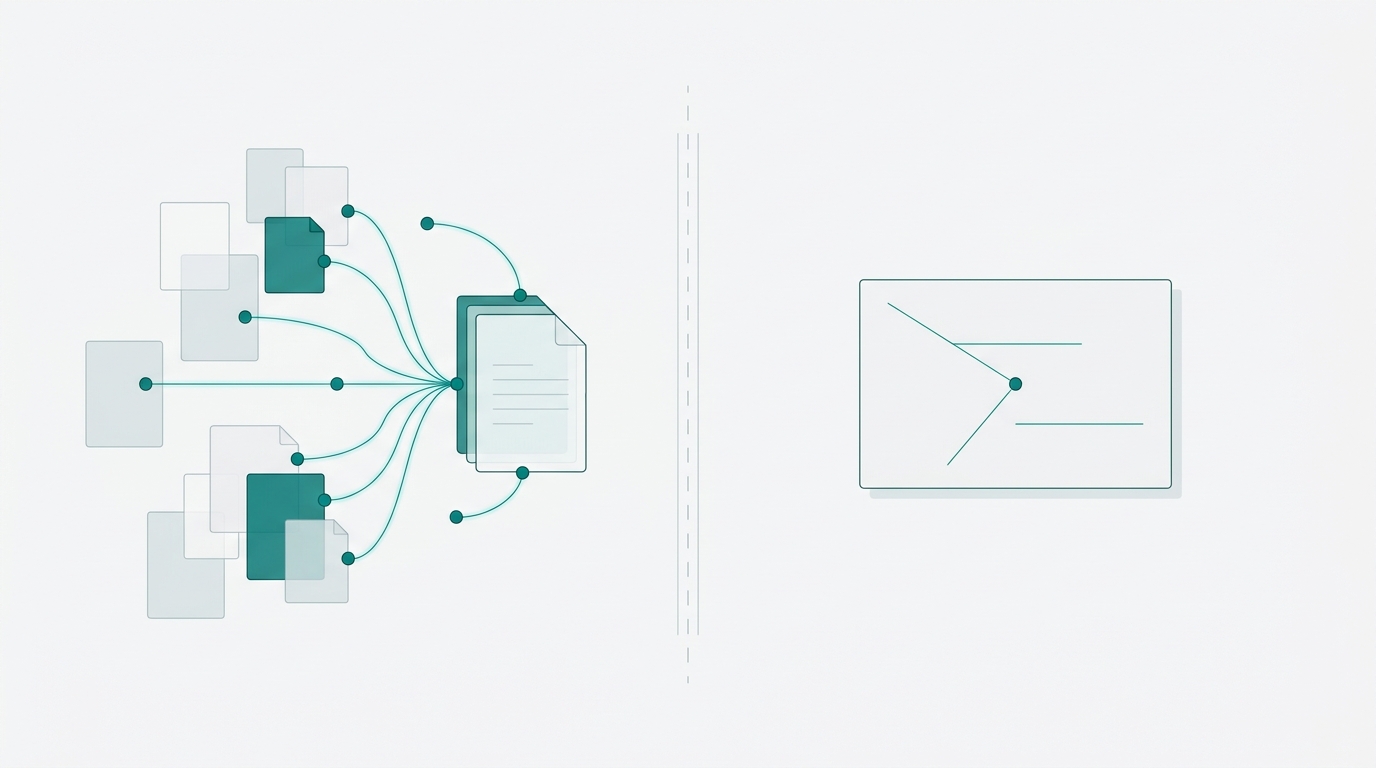
Most B2B SaaS blogs look the same: eight posts from 18 months ago, a product update no one reads, and three "ultimate guides" that rank on page four for nothing. The posts don't talk to each other. There's no pillar. Google sees a pile of isolated pages and moves on.
That's the island content problem. And it's fixable in 30 to 60 days if you build a cluster on purpose instead of publishing at random.
This is an execution guide. By the end, you'll have five deliverables: a topic map, a cluster blueprint, a content queue, an internal-link map, and a quality checklist. Each one feeds the next. Together they produce a revenue-aligned cluster that Google can actually read as a signal of expertise, not noise.
No theory. No "content is king" preamble. Just the build.
Why Your Scattered Posts Aren't Ranking (And What Fixes It)
A post with no internal links, no shared topic signal, and no pillar page to anchor it is invisible to search engines, not because it's badly written, but because it doesn't belong to anything.
Search engines rank documents that prove coverage. When competitors in your niche publish 20 to 30 interlinked articles on a single topic, they're sending a dense, consistent signal: this site owns this subject. A site with 8 disconnected posts on adjacent topics sends no signal at all. (Backlinko)
This problem got worse in 2024. AI search engines like Perplexity and Google's AI Overviews pull citations from sites with dense, interlinked topic coverage. If your content isn't structured as a cluster, it's less likely to be extracted as a source, even if individual posts are well-written. (Horizon Marketing)
There's a revenue angle here that most SEO guides skip. A cluster isn't just an SEO tactic. Each cluster should map to a stage in your buyer journey: TOFU content builds awareness, MOFU content supports evaluation, BOFU content handles objections and drives conversions. A pile of disconnected posts can't do that. A cluster can.
The five deliverables this guide builds toward:
- Topic map: one pillar, 3 to 5 cluster themes, 15 to 25 subtopics
- Cluster blueprint: article titles, funnel stage, keyword, and conversion CTA for each piece
- Content queue: 10 to 14 research-backed briefs ordered by revenue proximity
- Internal-link map: a matrix tracking every link between cluster pages
- Quality checklist: five criteria every post must pass before publishing
Step 1: Build Your Topic Map (Days 1 to 3)
Start with one core topic. Not five. One.
This is where most SaaS founders go wrong. They try to cover "contract management," "legal ops," "e-signature workflows," and "compliance automation" in the same quarter. The result is thin coverage on all four instead of deep coverage on one. (ContentGrip)
Pick the topic that sits closest to your product's core use case. If you're building contract management software for startups, own "contract management" before you touch anything adjacent. Once you have 20-plus interlinked articles on that topic, you can expand.
Next, run a competitor topical gap analysis. Look at the top three sites ranking for your target keyword. What cluster themes do they cover that you don't? What supporting articles exist on their sites that have no equivalent on yours? This step tells you where the gaps are and which ones are worth filling first. (Horizon Marketing)
Map entities, not just keywords. Entities are the people, tools, processes, and regulations that belong to your topic space. For contract management SaaS, entities include terms like MSA, SOW, DocuSign, and CLM software. Including these entities in your cluster signals to search engines that your content covers the topic with real depth, not just surface-level keyword matching. (Mailchimp)
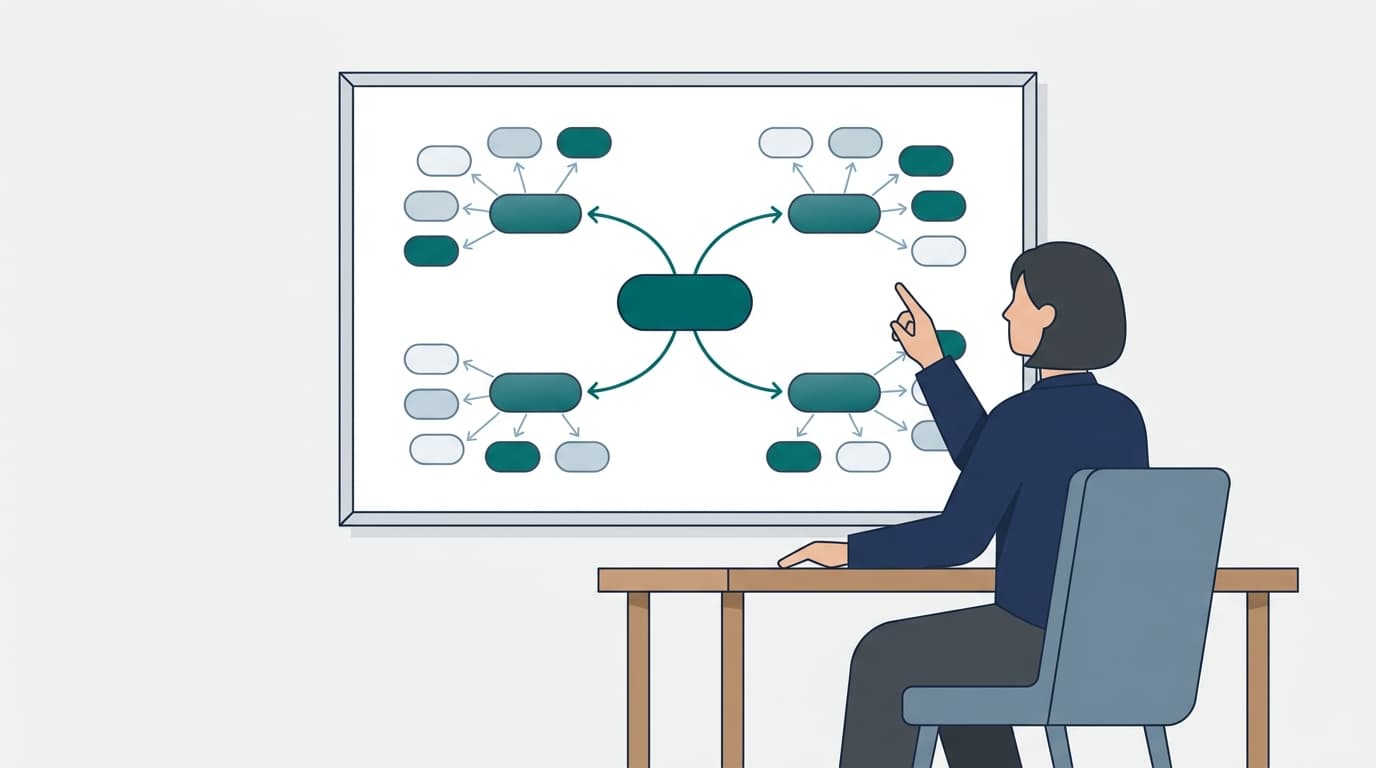
Your deliverable from this step: a spreadsheet with one pillar topic, 3 to 5 cluster themes, and 15 to 25 supporting subtopics. Add columns for search intent (TOFU, MOFU, or BOFU) and estimated monthly search volume. Keep it simple. A spreadsheet beats a complicated tool here.
Step 2: Design the Cluster Blueprint (Days 3 to 7)
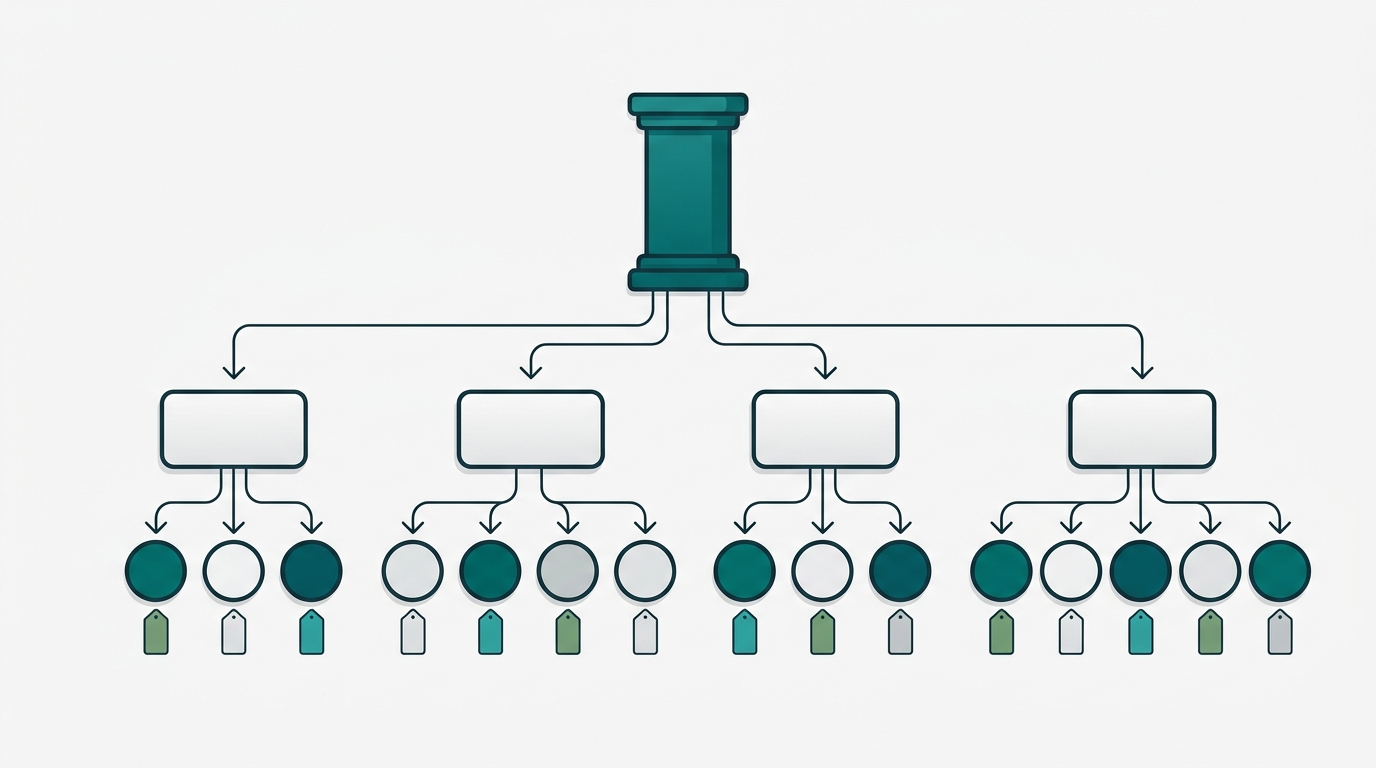
The pillar page is the hub. Everything else links to it, and it links back to everything else.
A pillar page should answer the broadest version of the topic question. It runs 2,000 to 3,000 words, includes AEO quick-answer blocks (H2 headings written as direct questions that AI search engines can extract), and links out to every cluster article. (Horizon Marketing) (ContentGrip)
Don't start writing cluster articles until this page exists, even as a draft. Without a pillar, you have no hub to link to.
Assign each cluster article a funnel stage and a conversion goal before you write it. This is the step that connects content to revenue:
- TOFU articles build awareness and link to the pillar page
- MOFU articles compare options and link to a free trial or demo
- BOFU articles handle objections and link directly to pricing
Most content guides treat this as optional. It's not. Without funnel-stage assignments, you'll publish 12 awareness posts and wonder why organic traffic doesn't convert.
Size the cluster for the time you have. A solo founder publishing 2 to 3 posts per week can realistically ship 1 pillar plus 8 to 12 cluster articles in 30 to 60 days. The 20 to 30 article benchmark that represents a mature cluster is your eventual target, not your starting point. (ContentGrip)
Your deliverable: a cluster blueprint document. One row per article. Columns for title, funnel stage, target keyword, word count target, and the conversion CTA that belongs at the bottom of each piece.
Step 3: Fill the Content Queue with Research-First Briefs (Days 7 to 14)
Brief quality determines draft quality. A vague brief produces a generic draft regardless of the tool you use to write it. A research-first brief produces a post that can actually compete.
A good brief includes:
- The target keyword and a clear question the article must answer
- 3 to 5 competing URLs to beat
- Required entities to include
- Real source citations with live URLs
- Funnel stage and conversion CTA
When you use an AI writing agent, the brief-generation step is where the research pipeline earns its keep. Ryterr pulls live web results, extracts competitor headings and coverage gaps, assembles real citations, and surfaces a structured brief before a word of the draft is written. You review and approve. Then the draft runs. That's the "you see every step" principle in practice: no black box, no surprise output.
Sequence the queue by revenue proximity. BOFU articles first (they convert), then MOFU (they evaluate), then TOFU (they build volume). This is the opposite of how most founders sequence content. It's also why many content programs take time to show pipeline impact. Start close to the money.
Your deliverable: 10 to 14 briefs in a project management tool (Notion, Linear, or a spreadsheet), ordered by funnel stage, with research notes attached to each.
Step 4: Draft, Fact-Check, and Score Every Post (Days 14 to 45)
The draft step is not the hard part. The fact-check step is.
AI-generated content fails when citations are fabricated or statistics are hallucinated. A post with a made-up study cited to a real-looking URL doesn't just fail SEO. It damages your credibility with readers who check your sources, and AI search engines are increasingly trained to detect low-citation or poorly-sourced content. (Horizon Marketing)
Run every post through this five-point checklist before publishing:
- Every stat has a named source with a live URL
- No banned hype words (no "leverage," "unlock," "seamlessly," or their relatives)
- Internal links point to the pillar and at least one other cluster article
- The H1 and first H2 include the target keyword
- The post answers one specific question, not five
Ryterr's quality audit scores each draft on five dimensions: research depth, citation accuracy, brand voice match, SEO structure, and readability. A founder can see the score before publishing and use the Improve function to fix weak dimensions without rewriting from scratch. The score is visible, the citations are listed, and the reasoning is shown. Nothing is hidden.
On velocity: 2 to 3 posts per week, with each post taking a few minutes of active founder time (brief review, draft review, publish). The research and drafting pipeline runs in the background. Your job is judgment, not production. That's the tradeoff named honestly. (Ahrefs)
Step 5: Wire the Internal-Link Map and Measure (Days 45 to 60)
Internal linking is the mechanism that turns a pile of posts into a cluster. Without it, you have content. With it, you have a signal.
The rule is simple. Every cluster article links to the pillar. The pillar links to every cluster article. MOFU articles link to BOFU articles. (ContentGrip) (Horizon Marketing)
Build the internal-link map as a matrix. Rows are published articles. Columns are target articles. Cells indicate whether a link exists. Audit it every two weeks. A 10-article cluster should carry enough internal links to connect every article to the pillar and relevant supporting pages. If you're under that, you have gaps to fill before you expand.
Measure what matters for SaaS:
- Organic sessions to cluster pages (not total pageviews)
- Demo or trial clicks from MOFU and BOFU posts
- Keyword ranking movement for the pillar page
Set a 60-day checkpoint. If the cluster is indexing, ranking movement has started, and at least one BOFU post is generating demo clicks, expand to a second cluster. If it's not, fix the internal linking and wait another two weeks before diagnosing anything else. (Moz)
Most SEO programs stall because founders declare failure at week six and restart. Clusters take time to index and accumulate authority. Sixty days of consistent publishing and linking is the minimum viable experiment, not the expected payoff window.
FAQ
How many posts do I need before a cluster starts to rank?
There's no universal number, but a pillar page plus 8 to 10 well-linked cluster articles is a viable starting point. The 20 to 30 article benchmark represents a mature cluster, not a launch requirement. Start with the pillar and your top BOFU articles, publish consistently, and let ranking signals accumulate before expanding.
Should I build the pillar page first or start with supporting articles?
Build the pillar first, even if it's a draft. Supporting articles need somewhere to link. Without a published pillar, internal links from cluster articles have no destination, and the topical signal you're trying to build doesn't form. A rough pillar that you iterate on is better than no pillar at all.
What if my topic area is very narrow? Will I run out of subtopics?
Most founders underestimate how many subtopics their core use case generates. If you're genuinely stuck at 10 subtopics, you've probably defined your topic too narrowly. Go one level broader (not three levels broader) and re-run the gap analysis against competitors. Entity mapping often surfaces supporting topics that keyword research misses.
How do I handle a cluster article that could belong to two different funnel stages?
Assign it the stage that matches the primary search intent, then adjust the conversion CTA accordingly. A post that can serve both TOFU awareness and MOFU evaluation should have a MOFU CTA (free trial, demo) if the reader is likely in evaluation mode when they search that query. Don't try to serve two intents in one post. Pick one.
Can I build a cluster using AI-generated content without hurting my credibility?
Yes, if every claim is sourced and every citation is real. The credibility risk with AI-generated content isn't the AI, it's fabricated statistics and hallucinated URLs. A post with real citations, real sources, and a named author passes the same credibility test as a human-written post. A post with invented stats fails it regardless of who wrote it.
Sources
- ContentGrip: What Is Topical Authority?
- Horizon Marketing: How to Build Topical Authority That AI Search Engines Trust
- Mailchimp: Topical Authority
- Backlinko: Topic Clusters
- Ahrefs: Topic Clusters
- Moz: Topic Clusters SEO
Pick one core topic today, build the spreadsheet, and run the competitor gap analysis before you write a single word. The cluster design takes three days. The writing takes six weeks. The ranking impact compounds for months after that. Start with the map, not the draft.